SAM ODE AND THE UNCERTAINTY OF ALIA'S IMAGINED SECOND TERM
Alia's public reassurance that Sam Ode remains his 2027 running mate has not settled questions about the deputy governor's political future. With several influential figures displaced during Alia's first term and Nigerian history offering examples of deputy governors who were impeached under their principals, what guarantees does Ode have about his place in Alia's imagined second term? Being secure on the ticket may not necessarily mean being secure in government.
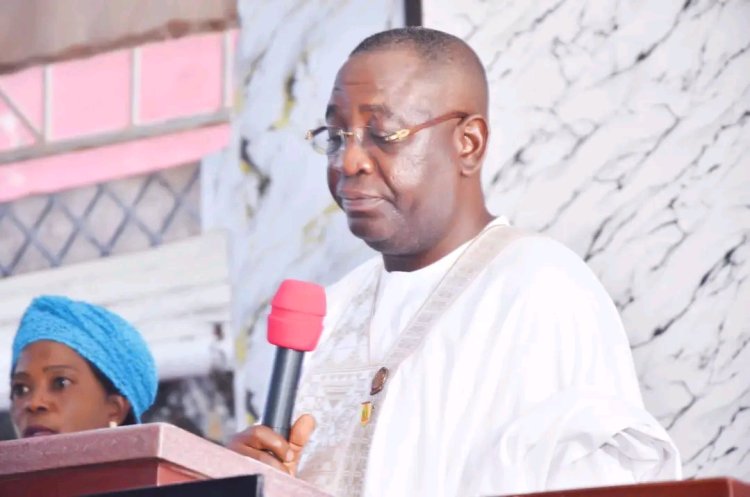
By Aondoakaa Tersugh Daniel, 06/11/2026
Governor Hyacinth Alia says he has no plan to replace Chief Sam Ode as his running mate in 2027. That may calm the immediate noise, but it does not settle the matter. A governor whose first term has been marked by shifting alliances and the removal of so many key players cannot end this speculation with one disclaimer. The rumour found believers because the circumstances made it believable. The real question is no longer whether Ode will appear on the 2027 ballot. It is what awaits him after that ballot, in the second term Alia is asking Benue people to grant him.
Look at what has happened in this administration. The State APC has seen a controversial change of chairman. The Secretary to the State Government, the Chief of Staff, the Speaker, the Majority Leader, the ALGON leadership and several commissioners have all been affected by changes in the political arrangement. These are not minor offices. Each one represents a centre of influence, authority or party organisation. Every case may have its own explanation, but together they point to a pattern. If people of such weight could be displaced or politically separated from the governor, on what basis do we assume Ode is immune? The title of deputy governor does not guarantee a healthy relationship with the man who sits above him.
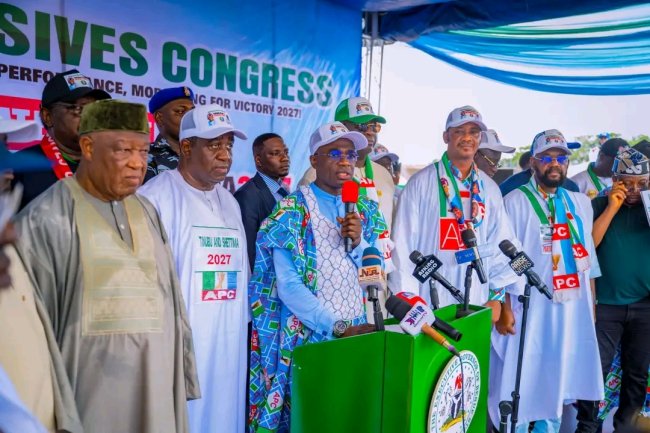
Then there is the campaign branding. In 2023, the ticket was presented as Alia/Ode, two partners asking Benue people for a joint mandate. Today the campaign structure carries the name Tinubu/Alia. I accept that branding is not proof that Ode has been dropped, and his presence at the inauguration does not show that he has lost his place. Even so, the change is conspicuous. Why has a joint governorship ticket come to be identified with the governor alone? Is Ode still an equal partner, or is he now only expected to be there? These questions are fair, especially because the controversy was serious enough to force the governor to speak publicly.
Nigerian history gives Ode plenty to think about. Garba Gadi was impeached in Bauchi in 2009 under Isa Yuguda. Sani Abubakar Danladi went the same way in Taraba in 2012 under Danbaba Suntai. Sunday Onyebuchi was removed in Enugu in 2014 under Sullivan Chime, and Ali Olanusi in Ondo in 2015 under Olusegun Mimiko. Simon Achuba was impeached in Kogi in 2019 under Yahaya Bello. Rauf Olaniyan followed in Oyo in 2022 under Seyi Makinde, and Philip Shaibu in Edo in 2024 under Godwin Obaseki. Each of them held a position of real importance in his administration, and each had an impeachment story. Ode cannot assume he is beyond such an outcome, least of all in an administration where political relationships have already changed so often.
So the question is not whether Alia has assured Ode about 2027. It is what happens after the ticket, if the governor gets his second term. Would Ode keep the standing he has today? Would the relationship stay cordial, or would he become one more casualty of an administration that has already shed so many influential figures? Alia's own record in his first term gives us every reason to ask. A public statement about a running mate says nothing about the four years that follow it.
This controversy exposes a deeper problem of trust inside the Alia government. A deputy governor, who shares the highest executive mandate in the state, should not have to wonder about his future each time a rumour surfaces about his principal's intentions. Nor should a public disclaimer be the only comfort available to him. Alia may insist that there is no vacancy on his 2027 ticket, but that does not answer the more serious question about the partnership itself. For Ode, the best assurance would be a political environment in which his place is no longer surrounded by doubt. For the people of Benue, the bigger question is why a government nearing the end of its tenure has generated so much speculation about the security of its own partnerships.
The question of who occupies the deputy governor's office in Alia's imagined second term may be settled by the 2027 election, but the question of whether Sam Ode can trust the partnership is already before the public. If Ode has to depend on Alia's present assurances for his political security, what happens when those assurances are no longer politically convenient?