ALIA'S NEW DANCE PARTNER: WHY HE SHOULD HAVE LEFT WIKE ALONE
Governor Hyacinth Alia's mockery of Nyesom Wike's signature dance and complete with a rainbow scarf, may be another costly exercise in political misjudgment. Having picked battles with Akume and his political structure, and generated tensions with the Presidency, Alia now appears to be inviting Wike into his growing collection of political confrontations. Does the governor mistake political restraint for weakness? He may soon discover that not everyone he provokes will dance to his music.
By Aondoakaa Tersugh Daniel, 12/11/2026
Governor Hyacinth Iormem Alia appears to have developed an unusual political hobby: picking fights with people whose political experience, networks and influence he should ordinarily be studying. Having opened unnecessary political battles with Senator Dr George Akume and his political structure, and extended the atmosphere of disrespect to the Presidency, the governor seems to have concluded that political restraint is evidence of political weakness. Unfortunately, his latest political adventure appears to involve Chief Nyesom Wike. This time, Alia may have mistaken the wrong man for another political opponent who will simply watch him perform and pretend not to notice.
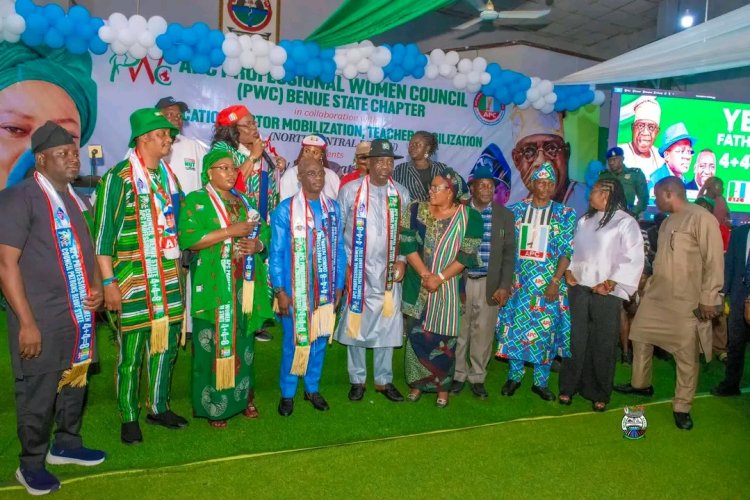
At the beginning of the Alia administration, the governor's political signature appeared to be chains and medallions hanging around the necks of his supporters. It almost looked like a vaccination campaign for political loyalty, with the governor's followers proudly displaying their identification tags. Some have since discovered that political loyalty does not require wearing a chain around one's neck. Others, apparently, are still enjoying their political accessories. But yesterday's appearance introduced a new fashion statement: a rainbow coloured scarf associated with Wike's political coalition, accompanied by a theatrical mockery of the FCT Minister's signature dance moves. Apparently, the governor has graduated from distributing political medallions to borrowing political costumes. Whether the scarf was a fashion decision or a deliberate provocation, the accompanying performance made the political message difficult to ignore.
Alia should perhaps have studied the political storm surrounding Governor Hope Uzodimma before turning Wike into the subject of his public entertainment. Hope had publicly challenged the existence and relevance of the Rainbow Coalition and made statements distancing APC governors from the arrangement. The disagreement subsequently became a subject of political tension involving Wike. The political developments that followed, including the court decision that affected Hope's party's candidate, should remind political officeholders that political battles do not always end with television appearances and public declarations. Nobody should casually assume that a disagreement with Wike is an ordinary exchange of political pleasantries.
Alia should also take a look at Governor Siminalayi Fubara's experience. Whatever interpretation one gives to the Rivers political crisis, it is difficult to ignore the consequences of the confrontation between Fubara and the political force associated with Wike. If Alia has been studying these developments, he should know that political theatre and political warfare are two different things.
Wike has not exactly been silent about Benue politics. He recently made comments suggesting that Suswam and Alia were jealous of him, while insisting that he always wins his political battles. He has also spoken about flushing out some APC governors after the presidential election. Against this background, Alia's decision to turn Wike's signature dance into an object of public mockery is particularly interesting. Could the governor be volunteering for a political examination he has not prepared for? Could he have mistaken Wike's political silence for an inability to respond? If Wike eventually decides that Alia belongs among the governors he has been talking about, perhaps the governor will discover that not every political confrontation can be settled with a carefully rehearsed speech.
And then came the most interesting part of the performance: "HALoooo!" For a governor who ordinarily appears very particular about grammatical expression, pronunciation and the careful delivery of English words, that sudden theatrical greeting deserves some attention. Was he greeting the audience, calling Wike into the dance or announcing the commencement of another political expedition? Perhaps the governor wanted to demonstrate that he could reproduce Wike's dance steps without understanding the political circumstances surrounding the dance. The performance may have entertained his immediate audience, but it raises a more serious question about the judgment behind the spectacle. Political leadership requires knowing when to speak, when to negotiate and, more importantly, when not to provoke another confrontation.
Alia has already accumulated enough political disagreements to occupy a governor's entire tenure. Akume and his political structure have had their share of his confrontational politics. The Presidency has not been spared the uncomfortable atmosphere surrounding his political conduct. Now Wike appears to have been added to the collection. Perhaps the governor believes that every political veteran he provokes must eventually retreat because others have chosen restraint. That is not how political calculations work. The fact that some people have chosen not to respond dramatically does not mean they lack the capacity to respond.
Alia may enjoy his new rainbow scarf, his borrowed dance steps and his "HALoooo!" performance, but he should remember that political invitations sometimes attract guests who are not interested in following the host's choreography. He has opened too many fronts for a governor who should be concentrating on governing Benue. The question is no longer how many political battles Alia can initiate, but how many he can afford to sustain. Yesterday, he danced. Tomorrow, he may discover that politics is not always a performance in which the person holding the microphone controls the music.