WHO WILL FEED ALIA'S FACTORIES? THE UNANSWERED QUESTION OF INDUSTRIAL REVIVAL
BIPC must explain how Taraku Mills and Food Basket Brewery will secure sustainable supplies of raw materials to support commercial production. With Taraku operating at just 50 tonnes against its 200-tonne daily capacity, questions also arise over electricity costs, profitability and when the factory will break even. From the ₦500 million spent sourcing sorghum from Zaria to the unanswered questions surrounding soyabean supplies and ZEVA's production needs, is the Alia administration building sustainable industries or repeating Benue's history of factories without reliable agricultural foundations?
By Aondoakaa Tersugh Daniel, 11/11/2026
The Alia administration has been busy with announcements and production photographs from its factories. One question deserves more attention than all of them. Where is the agricultural supply chain that will feed these investments? Benue is called the Food Basket of the Nation, but that reputation does not automatically become a dependable supply of industrial raw materials. Building a factory is one thing. Securing enough inputs to keep it running all year is another. The Benue Investment and Property Company (BIPC) must explain the difference as it celebrates the revival of Taraku Mills and the establishment of Food Basket Brewery.
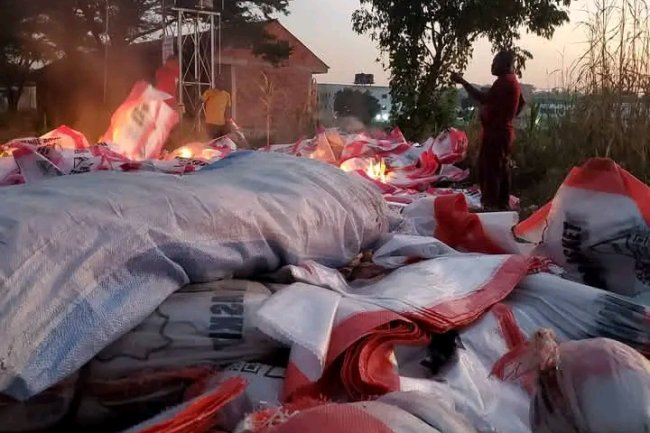
In August 2025, Dr Raymond Asemakaha announced backward integration plans for the brewery and urged Benue farmers to grow cassava and sorghum for it. The idea was commendable, but it placed an obligation on BIPC to show how the supply chain would be built. By April 2026, he announced an outgrowers scheme for sorghum, rice and orange farmers, with 20 bags of sorghum seedlings to be distributed and offtake guaranteed at harvest. He also admitted that the company had earlier spent about N500 million buying sorghum from Zaria.
That admission tells its own story. If the brewery needs sorghum in commercial quantities, what is the scale of the investment to guarantee continuous supply? Twenty bags of seedlings may start something, but how much sorghum will they produce, and what share of the brewery's yearly needs will that cover?
Taraku Mills raises the same question. In July 2026, Asemakaha announced that the factory would process soyabeans, maize, beniseed and cassava into edible oil, animal feed and industrial inputs, including beer grits for the brewery. He urged farmers to grow more soyabeans and promised an offtake market. Yet if he saw the need for a sorghum and cassava plan for the brewery, where is the matching plan for Taraku? How many hectares of soyabeans, maize and beniseed have been committed to the factory? How many farmers are under contract, and what yield is expected from them each year? Is there a deliberate agricultural programme behind this revival, or is the administration simply hoping farmers will respond to public appeals?
Taraku's own history makes these questions harder to wave away. The original vision of Aper Aku was never to build a processing plant and hope for supplies. He understood the huge agricultural demands of industry and designated five locations for soyabean cultivation, while encouraging independent farmers to join in. One of them, Ihowe, has been leased to the Obasanjo Mango Plantation, and others have been taken over or diverted from their purpose. The factory was built for large scale production but reportedly ran far below its installed capacity. Its problem was never broken machinery. Its supply foundation was compromised. Overhauling the machines without repairing that foundation restores only one part of a much larger system.
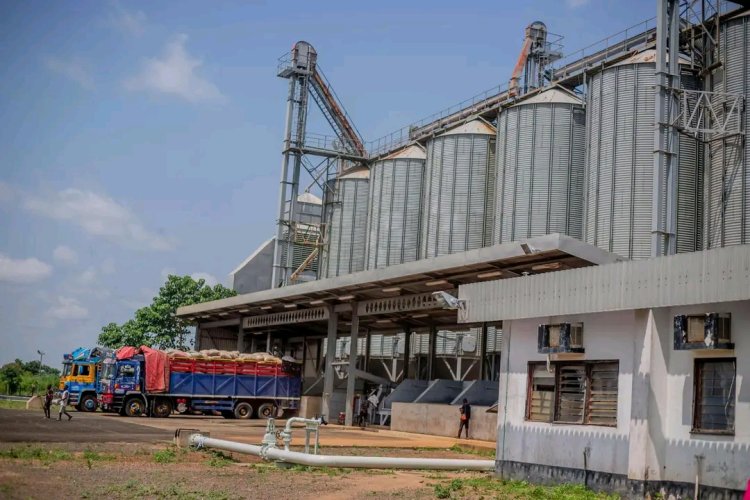
The recent figures also need careful reading. On 17 September 2026, BIPC announced that Asemakaha had ordered the immediate delivery of three truckloads of soyabeans to prepare the factory for production. By 3 October, he said about 300 metric tonnes had arrived in eight trucks and test production had begun. The plant manager disclosed an installed capacity of 200 tonnes daily, with operations starting at 50 tonnes daily because the equipment had been idle for years.
There is also an economic question about the cost of operating below capacity. Taraku Mills is currently producing at 50 tonnes daily against an installed capacity of 200 tonnes. What does this mean for its operating costs, particularly electricity? If the production lines and supporting machinery must operate at a power load that does not reduce proportionately with output, the company could be bearing substantial energy costs while generating revenue from only a quarter of its capacity. It is like purchasing a 30-tonne truck, loading it with just 10 tonnes and still bearing the cost of running and maintaining the vehicle. At what point, therefore, does Taraku Mills break even? How does BIPC intend to make the factory commercially viable when its production volume remains significantly below capacity while its operating costs continue to accumulate?
Receiving 300 tonnes for a test run is not the same as securing raw materials for sustained commercial production. Even at 100 tonnes a day, that consignment is only three days of work. BIPC must explain how it will keep the factory supplied after it is exhausted.
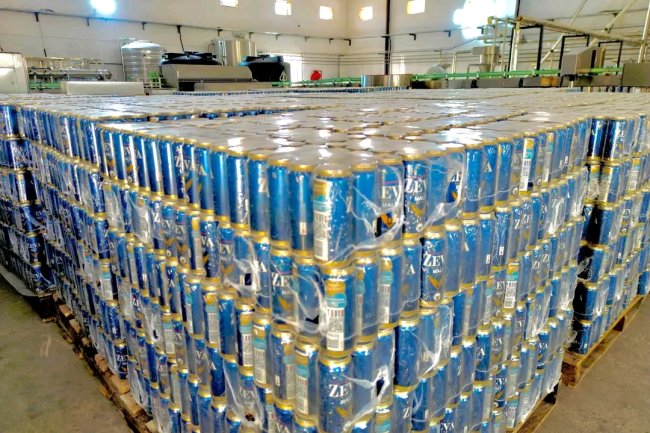
The brewery faces a related test. Asemakaha has announced a daily capacity of 10,000 crates and spoken of a N1 billion monthly beer market in Benue. What quantity of sorghum will that capacity demand? Can Benue's present output meet it all year? If not, what agreements has BIPC reached with farmers and aggregators in other states?
BIPC is entering a market where established breweries have spent years building procurement relationships, and competing processors are already buying the same grain. It cannot simply announce that farmers should plant sorghum and expect a reliable supply chain to appear. In January 2026, The Guardian reported that the brewery was sourcing some sorghum and malt from outside Benue. A BIPC official blamed this partly on climatic requirements and said the company was exploring ways to develop local production and preservation. What has become of that effort, and how much of the brewery's needs can now be met locally?
The old Benue Brewery in Makurdi offers a lesson. Published accounts attribute the departure of Nigerian Breweries to the business environment and including multiple taxation. Asemakaha argued in 2024 that Benue had enough agricultural resources to support a brewery, and he issued an ultimatum to Nigerian Breweries to resume production. The new brewery is therefore a chance to show that the state can do more than erect a plant. It must show it can organise the farming economy around it. If the old brewery fell to the business climate, this one must not fall to poor procurement. The question was never whether Benue can grow sorghum. It is whether BIPC can guarantee the volume, quality, price and consistency that commercial production demands.
Taraku Mills and Food Basket Brewery are also not independent of each other. BIPC has named Taraku as a possible supplier of beer grits to the brewery. That could become a useful industrial value chain, but it doubles the responsibility. If Taraku cannot secure enough maize and other inputs, how will it supply the brewery? If the brewery cannot secure enough sorghum and malt, how will it sustain its advertised output? A linked industrial arrangement needs an equally linked agricultural supply system. Otherwise the troubles of one factory simply become the troubles of the other.
BIPC should therefore publish its procurement and backward integration plans for both companies. How many hectares are under its direct supervision? How many outgrowers have signed supply agreements? What annual quantities of soyabeans, maize, beniseed, cassava and sorghum are projected? What share will come from Benue and what share from outside? What arrangements exist for storage, aggregation, transport and preservation? How much working capital is set aside each year to buy raw materials? These are not unreasonable demands. They are basic commercial questions about two public investments whose success the administration presents as its own achievement.
Benue people have seen factories launched with great expectations, only for them to become liabilities when the foundations that should have sustained them were neglected. Taraku Mills is proof that machinery alone guarantees nothing. Food Basket Brewery must not become another experiment in which production announcements run ahead of a dependable supply chain. The Alia administration cannot claim to have transformed Benue's industrial economy because machines have been repaired, bottles have been filled or test runs have started. The real measure is whether these companies can procure their raw materials, sustain production, meet their financial obligations, create lasting jobs and stand without draining public funds.
BIPC owes Benue people answers. If Asemakaha had a plan to encourage farmers to cultivate sorghum and cassava for the brewery, what is his corresponding plan to feed Taraku Mills? If N500 million has already been spent sourcing sorghum from Zaria, what is being done to end that dependence? And if Taraku is expected to supply beer grits to the brewery, what guarantees exist that both factories will have sufficient raw materials to operate at commercially viable capacities? More importantly, if Asemakaha disclosed in April that N500 million had been spent purchasing sorghum while ZEVA was already under contract production, where did the sorghum supplied under that arrangement go? What quantity was purchased, and how was it utilised? These are questions BIPC must answer.
The revival of Taraku Mills must not repeat its history, and Food Basket Brewery must not become a factory whose capacity is more convincing in government announcements than in its supply chain. Benue needs sustainable industries, not merely running machines.