ALIA'S MONEY SHARING DEFENCE: THE CONVENIENT LIE BEHIND THE BENUE APC CRISIS
Governor Hyacinth Alia says the Benue APC crisis exists because he refused to share public money. I do not accept that explanation. It is a convenient cover for the real disagreements: broken promises, disregard for party structures and the exclusion of key stakeholders. The Assembly leadership arrangement that was abandoned, the choice of SSG and the confrontation with the party structure were fights over authority and trust. They cannot be reduced to a demand for money. If integrity is his argument, then the questions around Dr Dennis Akura, Dr Grace Adagba, SUBEB and the Alia Meter must be answered. The reported acts of political generosity must also be explained. I reject his attempt to paint dissatisfied APC stakeholders and supporters of Chief Michael Kaase Aondoakaa SAN as people chasing public funds. The PDP has no business defending the quarrels of the APC. Its task is to show Benue people a credible alternative in 2027, built on accountability and competence.
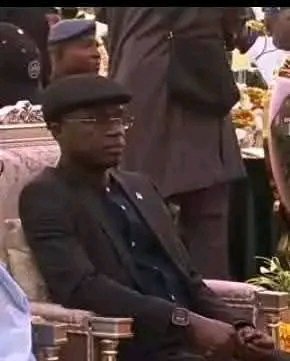
By Aondoakaa Tersugh Daniel, 16/11/2026
Governor Hyacinth Alia now says the crisis in the Benue APC exists because he refused to share public money with stakeholders who want to turn Benue into their private estate. It is a convenient story. It paints him as an honest man surrounded by greedy politicians, and it is meant to blackmail prominent stakeholders and discredit the emerging opposition ahead of 2027. He wants Benue people to believe that everyone who disagrees with him is after the treasury.
A governor who makes such a grave allegation owes the public details. Who asked him to share public money? How much was demanded, and when? Was the demand made in writing or in a meeting? If he holds evidence of an attempt to divert public resources, why has it not gone to the appropriate authorities? Integrity is not proved by accusing opponents of greed. It is proved by transparent governance and accountability.
Let me be clear that nobody is entitled to Benue's money for helping a candidate win an election. Public funds belong to the people and must be spent for their benefit. But that principle cannot be used to cover political arrogance, broken agreements and the deliberate weakening of party structures.
The APC crisis has a history, and money is not in it. Before the Assembly elected its principal officers, there was an understanding on the leadership arrangement, and Alia reportedly assured Senator George Akume on the eve of the election that it would stand. On the day itself, it was abandoned. The choice of Secretary to the State Government followed the same pattern. The party leadership had its preference, and Alia went ahead with his own. Then came the confrontation with the Austin Agada led party structure and the attempt to remove Agada as state chairman. These were fights over authority, consultation, trust and control of the party. At what point did the abandonment of political agreements become a demand for money?
The insult is deeper when we recall how Alia emerged in 2022. His ambition was not carried by an independently financed political empire. It was sustained by the mobilisation, networks and financial contributions of stakeholders who believed in his candidacy. They did not help him because they were promised permanent access to the treasury. They believed they were building a political project. Nobody is asking Alia to repay contributions with public money. But gratitude, consultation and respect are not corruption. His mandate does not make him the owner of the party, and occupying Government House does not give him the right to monopolise political authority in Benue.
If integrity is the foundation of his argument, his administration must answer for its own record. The House of Assembly reportedly demanded explanations over ₦1.782 billion in deductions linked to local government administration under Dr Dennis Akura's supervision. Its SUBEB investigation questioned a balance of about ₦2.073 billion from funds received for primary school teachers' salaries. The recruitment of 9,700 teachers also provoked disputes that ended in legislative action against Dr Grace Adagba. These are allegations and legislative findings that require proper investigation, not convictions. But they are legitimate questions of public accountability, and the reported EFCC scrutiny of officials over technical college contracts adds to them, as I noted when I wrote about the sacrificial lambs in this administration. Alia cannot pose as the uncompromising defender of public resources while billions of naira under his own government remain unexplained.
The Alia Meter gives him a chance to show the transparency he invokes so often. Where an expenditure entry is vague, citizens are entitled to ask for the project location, the contractor, the cost, the status and the verifiable outcome. A vague entry is not proof of theft, but it raises a fair question about the quality of disclosure. The same applies to reports of vehicles and motorcycles handed to associates and loyalists by appointees, the Hilux reportedly given to a Catholic priest by Chief Ternenge Moses, the vehicle reportedly bought by Alia for a media supporter, and the church project in Jos said to have cost billions. The question is whether public resources were involved, whether official influence was used and whether the spending was properly accounted for. Alia cannot condemn political patronage in one breath and leave questions about his own generosity unanswered in the next.
There is also a calculation behind this narrative. Alia knows the APC crisis has produced a growing number of dissatisfied stakeholders, and some are gravitating towards Chief Michael Kaase Aondoakaa SAN. Instead of confronting why they are leaving, he is branding them as people who only want public funds. He wants the stigma of his party's crisis to rub off on an emerging alternative, and he wants Aondoakaa's growing relevance to look like a scramble for patronage. But the PDP does not need Alia's permission to offer Benue a different direction, and it has no duty to defend one APC faction against another. Aondoakaa must be judged by his own record, capacity, policy direction and vision, not by Alia's attempt to discredit those who disagree with him.
We must also separate support for President Bola Tinubu from support for Alia's second term. The two are not the same, and I made this point when I argued that Tinubu is not Alia's political property. Stakeholders can back Tinubu's reelection and still reject Alia in Benue. They can choose a different governorship candidate in 2027 without becoming enemies of the APC's national interests. Treating every disagreement as a demand for money is political intimidation. The same goes for the reported discussions with Senator Iyorchia Ayu, where claims of a ₦5 billion demand and other commitments remain allegations that need credible verification. Alia cannot ask the public to accept his version of those negotiations without question while everyone else is made to answer for theirs.
The bigger worry for Benue is not the quarrel inside the APC. Parties manage their own affairs, and the PDP will not be dragged into refereeing between factions. The real worry is what the crisis says about the quality of leadership. A governor who cannot keep the trust of the stakeholders who brought him to power, who disregards agreements and turns disagreements into public accusations, is exposing a weakness that goes beyond party politics. Benue people are entitled to ask whether this is the leadership they should be asked to renew.
This is where the PDP stands apart. Benue needs more than a governor who calls himself incorruptible and dismisses every critic as a looter in waiting. It needs a government whose integrity can be measured by its records, whose spending can survive scrutiny and whose development agenda is visible in the lives of ordinary people. Chief Michael Kaase Aondoakaa SAN offers a chance to take that argument to the electorate with a clear alternative. His candidacy should rest on competence, experience and policy, not on a collection of unhappy politicians from another party.
Alia should stop using the treasury as an excuse for every political failure. If anyone demanded public money for personal benefit, let him name the person and show the evidence. Then let him explain the broken agreements, the disregard for party structures, the unresolved financial controversies and the questions around his own expenditure and political generosity. Nobody is asking him to share Benue's money. The people are asking him to account for it.
Alia may call the growing opposition a conspiracy of greedy politicians, but that will not erase his record or stop Benue people from making their own assessment. In 2027, the question will not be whether he shared money with stakeholders. It will be whether he used the opportunity entrusted to him to govern Benue well.