SUSWAM'S MEN IN, WHERE ARE GEMADE'S MEN?
Why are political associates linked to Gabriel Suswam reportedly finding accommodation in the Benue government while Chief Barnabas Gemade's loyalists struggle to point to meaningful appointments despite his public support for the administration? This commentary examines the politics behind the latest appointments, Gemade's influence as Chairman of the Tinubu/Alia Campaign Advisory Council, the rejection of President Tinubu's reconciliation initiative, the pursuit of a second term and the allegations surrounding ₦200 billion in suspected financial irregularities. It raises a fundamental question about political loyalty, influence and the distribution of power in Benue State.

By Aondoakaa Tersugh Daniel, 04/11/2026
Governor Hyacinth Alia's latest appointments say more about the politics of his administration than the government may wish to admit. Officially, the ten names are about experience, competence and service delivery. Politically, they point to something else: whose interests are being accommodated, and whose are being ignored. Former Governor Gabriel Suswam's camp appears to be well placed, while those who openly stood with Alia when he needed them cannot show comparable influence.
I do not envy anyone holding an appointment under this administration. Being appointed is one thing; enjoying the privileges and institutional support that come with the office is another. Commissioners are allegedly being denied access to the Commissioners' Quarters, forcing some to keep rented accommodation while they struggle with their finances. There are also complaints of unpaid entitlements and of difficulties in discharging official duties. These claims need to be verified, but they raise a governance question: what is an appointment worth if the holder cannot enjoy its basic conditions?
In our politics, however, the announcement alone carries weight. An appointee may suffer privately while projecting political relevance in public. That makes appointments useful tools of recognition, even where the practical benefits remain doubtful.
The more revealing question is about Chief Engr. Barnabas Gemade. He has been one of the loudest defenders of Alia's second term ambition. He has praised the Governor in public, defended his administration and urged stakeholders to back his continuation in office. Yet I cannot see where that commitment has translated into meaningful appointments for his associates. I challenge the Governor and his supporters to name them. If they are many, let them be listed. If they are few, the public deserves to know.
Gemade's position makes the question sharper. He is a former Senate President of the PDP, a former National Chairman of the PDP and a former senator, now serving as Chairman of the Tinubu/Alia Campaign Advisory Council. Can he point to one appointment he secured for a loyalist? Is he there to lend legitimacy, endorse the Governor and help mobilise support, or does the chairmanship give him a real voice in political decisions? Chairing an advisory council is one thing. Showing that it carries influence is another. Perhaps his difficulty is that he offered his support to Alia without negotiating its value.
Alia's handling of President Tinubu's reconciliation initiative shows the same disposition. When the President intervened in the Benue APC crisis, the initiative reportedly offered Alia a straightforward path to peace and an automatic return ticket. Because it came so cheaply, he did not appreciate its worth. He rejected the understanding and insisted publicly that neither the President nor the party leadership had approved such an arrangement.
With the reconciliation derailed by his own pronouncements, the Governor now appears to be pursuing other routes to a second term. There are allegations that state resources are being deployed for his reelection project. If they are substantiated, Benue taxpayers will be paying for the consequences of a decision Alia himself helped create. Does he now see the value of the peace he once seemed unwilling to embrace?
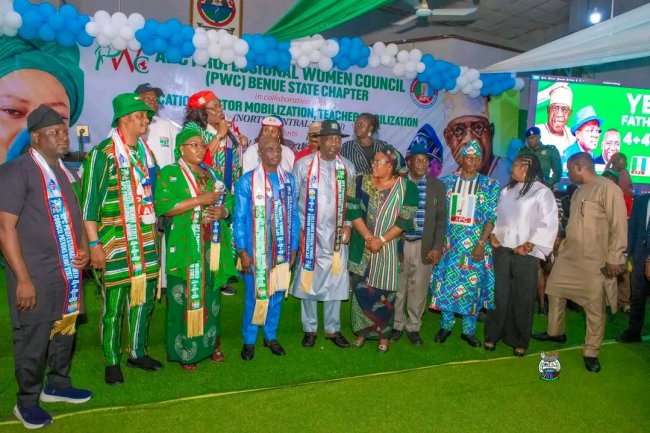
The campaign itself is being built around Tinubu/Alia, while genuine reconciliation and the inclusion of established party stakeholders remain unresolved. On November 4, the Benue Strategic Alliance for Tinubu 2027 publicly dissociated itself from the campaign council list. Its Director General, Chief Akange Audu, alleged that stakeholders who worked for Alia's emergence in 2023 had been sidelined.
This matters because the group says it remains committed to President Tinubu's reelection. Its objection is to how the Governor's campaign structure was put together. Supporting the President does not mean endorsing every arrangement the Governor makes.
There is also the matter of the reported ₦200 billion in suspected financial irregularities. The Benue PDP has demanded explanations over reported EFCC investigations involving senior government officials. These remain allegations, and neither the amount nor the wrongdoing should be treated as established until competent investigative authorities have spoken. Even so, the administration owes the people of Benue transparency. What transactions are being investigated? Which contracts and payments are involved? Who authorised the expenditures? These questions cannot be waved away as opposition politics simply because they are inconvenient. A government seeking another mandate must be ready to account for how it has managed public resources.
In the end, these appointments raise a larger question about the political philosophy of this administration. Is Alia building an inclusive coalition that recognises loyalty, experience and contribution, or assembling a structure that serves selected interests? Endorsements, public praise and campaign mobilisation are not substitutes for real participation. For those who have invested their political capital in the Alia project, the time has come to examine the returns.