UBA SANI HAS A SCORECARD. WHAT DOES ALIA HAVE?
Kaduna Governor Uba Sani has outlined achievements in education, healthcare, agriculture and infrastructure, raising questions about how Benue Governor Hyacinth Alia is translating political access into development. While the Wurukum flyover and Buruku-Logo Bridge represent significant federal investments in Benue, the wider question is what additional benefits the state has secured under Alia’s engagement with President Tinubu. The commentary also examines Alia’s strained relationship with Senator George Akume, arguing that Akume’s political restraint should not be mistaken for defeat. Ultimately, Benue needs measurable development, not merely political connections.
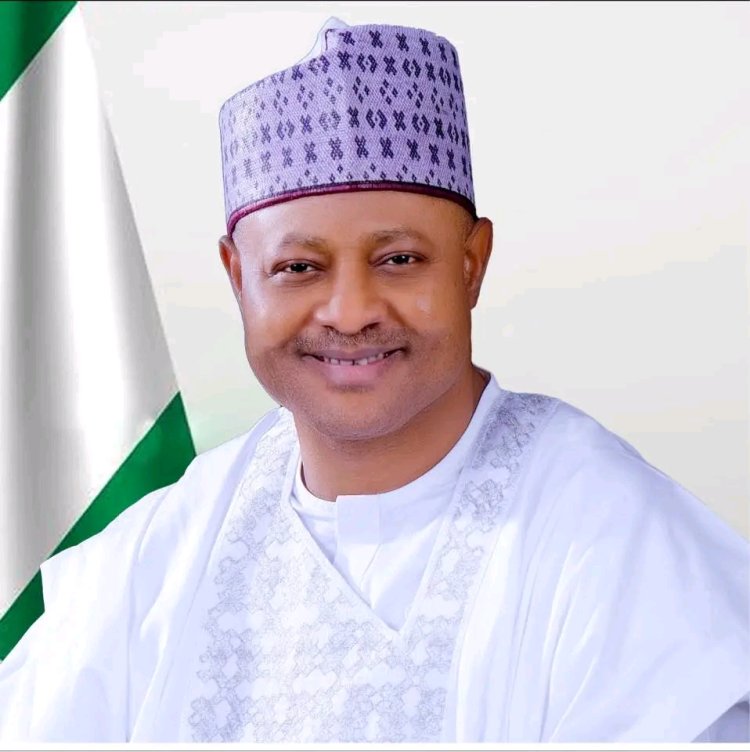
By Aondoakaa Tersugh Daniel, 28/10/2026
An interview with Kaduna State Governor Uba Sani offers an uncomfortable lesson for Governor Hyacinth Alia of Benue State. It shows what a governor can present when challenged to account for his administration: figures, completed projects and a clear explanation of how policy is changing lives. It also raises a hard question about access to the Presidency. What is the point of belonging to the same party as the President if that relationship brings nothing tangible to the people?
Uba Sani reports that his administration has returned more than 300,000 of about 550,000 identified out of school children to classrooms, reduced tuition in state owned tertiary institutions and set up vocational training centres. It says it has upgraded 255 primary healthcare centres and completed a 300 bed specialist hospital that stood unfinished for roughly 16 years. It raised the agricultural budget from about ₦1.48 billion in 2023 to more than ₦74 billion in 2025, and it has distributed fertiliser, expanded crop insurance and pursued agro industrial projects. It also reports about 150 road projects covering more than 1,300 kilometres across 23 local government areas, and says it has taken no new loan since assuming office. Whether every figure survives independent verification is a separate matter. What matters is that he has put a scorecard on the table.
Now return to Benue. Since May 2023, Alia has enjoyed incumbency, the APC platform and a federal government led by his own party's candidate. Which comparable results can he show? How many children has he brought back to school through a measurable statewide programme? What landmark hospital has his administration completed, and what has improved in primary healthcare, equipment, staffing and essential medicines? What vocational programme exists at scale to prepare Benue youths for work? Benue's health system needs functioning facilities and better patient care, not announcements.
Agriculture makes the comparison even more painful. Benue is called the Food Basket of the Nation, with fertile land, established farming communities and huge agro industrial potential. Yet Kaduna is the one presenting figures and programmes. What large scale support has reached Benue farmers? Which processing industries have been built or revived to add value to our produce? What has been done to connect farmers to markets and cut post harvest losses? A state with our agricultural advantage should not be struggling to show what government investment has done for it.
On infrastructure, I am not saying every road Uba Sani announced is complete or that Kaduna has no problems. My point is that he has laid out a broad programme with specific numbers against which he can be judged.
Benue has its share of federal projects, and they deserve credit. The Wurukum flyover in Makurdi is an important intervention that must be judged on its cost, design, completion and effect on traffic. The Buruku Logo Bridge, funded under the Tinubu administration through the Renewed Hope Infrastructure Development Fund, should improve connectivity and help farmers move produce to market. Neither should be dismissed because it is federally funded. But the credit belongs to the Federal Government's priorities, and these two projects do not prove that Alia's personal access has brought Benue anything extra.
Security is the sharpest test. Uba Sani speaks of reclaiming farmland once abandoned to insecurity, resettling displaced persons and reopening schools and clinics that had been shut by threats. In Benue, the Catholic Church shut down its institutions, including a parish in the Governor's own hometown, citing insecurity. How many displaced families have returned home safely? How much farmland has been restored to production? Nobody in Benue can judge security by the strength of a governor's relationship with the President. The test is whether citizens can live, farm, travel and trade without the constant fear of violence. If Alia has presidential goodwill, security should be the first place it turns into results.
This is why the Kaduna example matters. Uba Sani openly acknowledges federal support and still presents what his government says it has done. A governor's relationship with the President should be judged by the benefits it delivers, not by the number of photographs taken together.
Sadly, Alia seems to have misunderstood the politics of access. Instead of using his political capital to bring more federal investment to Benue, he has been locked in a prolonged war with Senator George Akume, the Secretary to the Government of the Federation and one of the influential figures in Tinubu's establishment.
The irony is plain. Akume remains in the President's camp and is associated with mobilising support for his reelection in 2027. If he had abandoned Tinubu to back an opposition candidate, Alia might have dressed his fight as a defence of the President's interests. That is not the case. So why wage war on a man whose influence at the centre could help Benue?
Worse, Alia has not won. He has deployed the instruments of incumbency and the machinery of state politics, yet he has not extinguished Akume's relevance. Anyone who reads Akume's quiet disposition as weakness has misread the man and his experience. The gentle strides of a cat are not cowardice. By refusing to be dragged into a shouting match, Akume has denied Alia the dramatic confrontation that would have suited the governor's narrative, and he has let events speak for themselves. Political battles are not won by the volume of attacks. They are shaped by relationships, patience, institutional influence and the ability to keep political capital until it is needed.
The experience of former Kaduna Governor Nasir El Rufai adds another angle, though his detention is a legal matter that must be kept apart from his politics. Tinubu nominated him for a ministerial post, the Senate did not confirm him after screening, and he later left the APC for the African Democratic Congress to oppose the President's reelection. It would be improper to claim, without evidence, that his detention is punishment for his political choices. The broader lesson is narrower and still useful: political relationships are shaped by interests and the ability to work within a coalition. Uba Sani has kept a cooperative relationship with Tinubu while presenting his record. Akume remains aligned with the President. Alia has chosen to burn political energy fighting an ally of the same man from whom he needs federal support.
A politically astute governor knows the difference between consolidating power at home and wrecking relationships that could bring resources home. Even if Alia eventually tightens his grip on the APC structure in Benue, that victory means nothing to citizens unless it produces federal investment, better security, stronger infrastructure and more economic opportunity. Political control is not a development index, and defeating an internal rival is not good governance.
The APC has scheduled campaign activities across several states, including Benue, but nobody should invent claims of presidential favour or disfavour from the arrangements for a single rally. The President's absence from one event does not by itself prove a breakdown with Alia. The real question is what political value Alia brings to the reelection project and what Benue receives in return for its support. Benue has a large voting population, a strong agricultural base and a strategic place in the Middle Belt. Its needs in infrastructure, security, agriculture and economic revival demand federal attention, and a governor seeking another term must show that his relationship with the Presidency has produced commitments and measurable benefits.
The comparison with Kaduna does not mean every policy of Uba Sani must be copied in Benue, since the two states differ in needs and finances. It means governors must be judged by their decisions, the resources they commit, the projects they deliver and the lives they improve. Alia's supporters may call these questions political attacks, but that will not make them go away. Celebrating party loyalty, abusing critics and announcing another political gathering will not answer them either.
By 2027, Alia must defend his own record before the people of Benue. He cannot lean on his relationship with Tinubu forever, and he cannot assume that a long war against Akume will turn into political dominance. His failure to overcome Akume, together with the questions over his achievements and his use of presidential access, is a serious threat to his reelection hopes.
Uba Sani has presented a scorecard. Alia must present his. Benue cannot afford to mistake political access for achievement, or the noise of political warfare for the substance of governance. And Alia should remember that while he has been busy fighting Akume, Akume's restraint may yet hurt his ambitions more than any public confrontation could.