TARAKU MILLS: BEYOND THE VIDEOS OF RUNNING MACHINES, WHAT HAPPENED TO THE 211 FORMER WORKERS?
BIPC's announcement of 47 new employees at Taraku Mills raises fresh questions about the fate of the 211 former workers with outstanding court-ordered entitlements. While Alia and Asemakaha publicise machine rehabilitation and projected billions in revenue, what has been done about the workers, the over ₦2 billion liability, and the factory's long-term water and power needs? If the Food Basket Brewery required a dedicated River Benue water treatment system after its boreholes proved inadequate, why should Taraku Mills depend on boreholes alone? A factory's revival goes beyond running machines; it demands reliable infrastructure, responsible management and justice for its former workforce.
By Aondoakaa Tersugh Daniel, 10/11/2026
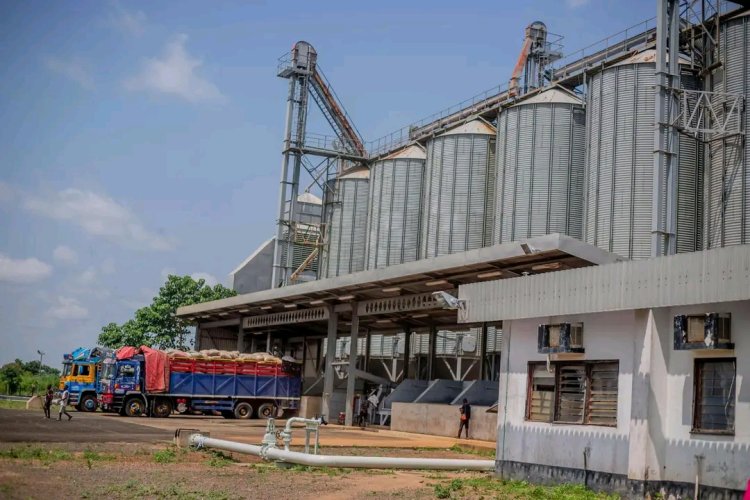
The Alia administration and the Managing Director of the Benue Investment and Property Company (BIPC), Dr Raymond Asemakaha, want Benue people to see the Taraku Mills revival as a great industrial achievement. They offer refurbished machines, inspection tours and videos of equipment running. But a factory floor that looks busy is not a revived industry. Revival is measured by production, commercial sustainability, infrastructure, jobs and the welfare of the people whose labour once kept the enterprise alive. While BIPC celebrates 47 new employees, I am asking what has happened to the 211 former workers.
Their story cannot be separated from this revival. In November 2020, the National Industrial Court ordered the payment of ₦1.4 billion to Aondohemba Agba Injo and 210 others, all former Taraku Mills employees. The Benue State Government then approached the Supreme Court for a stay of execution. In May 2024, Governor Hyacinth Alia himself admitted that the state faced a liability of over ₦2 billion from the unpaid workers' claims. He said garnishee proceedings had tied the hands of government and that his administration was working to settle the debt.
That admission created a duty to report back. More than two years later, nobody has told the public how much has been paid. Has the garnishee order been discharged? How many of the 211 judgment creditors have received their entitlements? Another factory inspection cannot answer these questions.
The 47 new hires, made up of 18 engineers and technicians and 29 operators, sharpen the questions further. BIPC also projects 1,500 direct jobs at full capacity. No one should oppose the recruitment of competent hands to restore an industrial plant, and the new recruits are not automatically replacements for the former workers, since their skills and categories may differ. But the announcement obliges BIPC to explain where the old workforce stands in its recovery plan.
Were the 211 contacted? Were their skills and experience assessed? Were qualified ones considered for re-engagement, and are any among the 47? What arrangement exists for those who cannot return to work? Has any money been paid toward their entitlements? Dr Asemakaha should publish the workforce transition framework. New jobs for new people cannot be used to bury old obligations to those who served before.
The infrastructure needed to sustain production also deserves scrutiny. BIPC speaks of a 5,000 KVA transformer, a dedicated two-megawatt power supply, Low Pour Fuel Oil to cut energy costs and borehole-supported water storage. The public needs to know which of these have been commissioned and which are still proposed or under implementation. Is the two-megawatt supply operational? How reliable is the industrial water supply? What is the real daily cost of power? Can the water infrastructure serve every production line as the factory grows? A factory does not survive on machinery alone. Without reliable water, affordable power, raw materials and a competent workforce, the state may spend heavily only to meet the same problems that killed the factory before.
The Food Basket Brewery should humble Dr Asemakaha's confidence in boreholes. The brewery was first designed to rely on boreholes within its premises. Its enormous water needs exposed the limits of that plan and forced a separate project drawing from the River Benue. In July 2026, BIPC announced a 6.2 kilometre river water filtration system and sedimentation reservoir to give it a dependable supply.
So if a brewery needed dedicated water infrastructure beyond its boreholes, how will an agro-industrial plant like Taraku survive on boreholes and storage tanks? BIPC itself admits that the solvent extraction plant, which needs large volumes of water, is not part of the initial phase. That the existing boreholes can support the crushing of more than 200 trucks of soybeans is no proof that the whole factory can run at full capacity. Asemakaha must publish the water demand of every production line, the available supply, the treatment capacity and the long-term plan. What is the projected daily consumption at full capacity? What can the boreholes and tanks actually deliver? Is a dedicated treatment plant part of the plan? Benue cannot celebrate another factory that starts up and then stalls for want of water.
The state of the machinery and the money spent on it also need an honest account. In July 2026, BIPC's technical team described much of the equipment and spare parts as being in good condition. Asemakaha later cited an independent technical audit which reportedly found that less than five per cent of the machinery was functional when BIPC took over. These two descriptions cannot both stand without explanation. Machines that are physically intact are not necessarily ready for commercial production. Let BIPC publish the audit, the rehabilitation expenditure, the list of machines repaired or replaced, the commissioning reports and the production records.
The projected ₦8.2 billion annual turnover and the promised thousands of jobs are projections, not realised performance. Test production is a milestone, but the Golden Oil will be judged by steady commercial output, market distribution, quality certification and profit, not by factory demonstrations and publicity releases.
There is another troubling matter. In June 2026, BIPC announced that it had cleared five months of outstanding allowances owed to security personnel at Taraku Mills. That may have been needed to protect the facility, but it raises questions. Who employed these personnel? Were they on the BIPC payroll, the Taraku Mills payroll or some other arrangement? By what authority did BIPC take over their allowances? Most important, if BIPC could clear those arrears, what has been done about the much older entitlements of the 211 former workers? I have no evidence that the security allowances were paid from money meant for the judgment creditors, and I make no such allegation. But the contrast between the two interventions makes transparency unavoidable. Government must say which liabilities are settled, which remain and who is responsible for them.
Governor Alia must also understand that he cannot hand this historical debt to BIPC simply because the company is coordinating the rehabilitation. He acknowledged the debt and promised efforts to settle it. He should now account for those efforts. Dr Asemakaha, for his part, owes the public an explanation of the workforce arrangements, the status of the former employees, the infrastructure investments and the factory's actual performance. Benue people are entitled to know how much has been spent, what has been achieved and what remains unpaid. The revival of Taraku Mills must not become another case of measuring government performance by carefully produced videos, tours and projected figures.
Taraku Mills needs more than a mechanical resurrection. It needs institutional recovery, sound management, dependable infrastructure, sustainable production and a credible human-resource policy. The machines may run, the soybean trucks may arrive and Golden Oil may reach the market, yet none of that settles the questions from the factory's past. What has Asemakaha done about the 211 former employees? What has Alia paid toward the debt he admitted? How many former workers have been re-engaged, and what happens to those whose entitlements remain unpaid? Can BIPC prove that its water and power arrangements will carry the whole factory at full capacity?
Until these questions get clear, documented answers, the Taraku Mills revival story is incomplete. A factory is not revived because its machines are running. It is revived when production is sustainable, workers are treated with responsibility and inherited obligations are paid.