TARAKU MILLS IN THE SPOTLIGHT, THE BREWERY IN THE SHADOWS
By Aondoakaa Tersugh Daniel, 20/10/2026
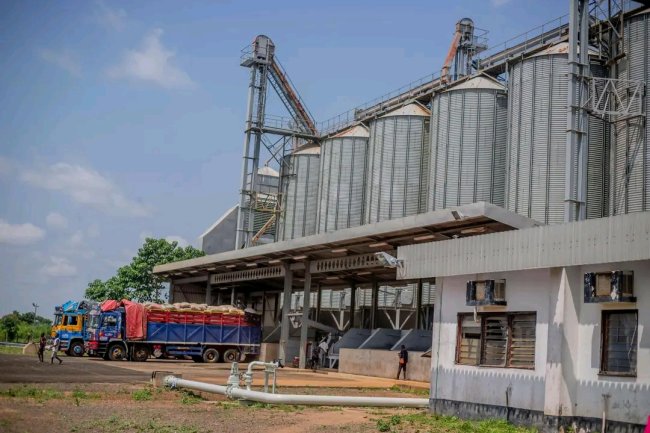
The Alia administration has once again demonstrated its preference for publicity over substance. Suddenly, the Benue Investment and Property Company (BIPC) is showcasing Taraku Mills, with videos of soybean deliveries and livestreams of production activities being circulated to create the impression that the factory has been revived under Governor Hyacinth Alia. Of course, seeing production activities at Taraku Mills is welcome. But in a state where almost every government activity is packaged as an extraordinary achievement, Benue people must learn to distinguish between a factory that has genuinely returned to sustainable operations and one that has merely been switched on for the cameras.
The question is not whether machines can run for a few hours while cameras are rolling. The question is whether the underlying problems that rendered the factory dormant have been resolved. And more importantly, why has Taraku Mills suddenly become the centrepiece of industrial publicity when the much publicised brewery remains conspicuously absent from comparable demonstrations of production?
The reported history of Taraku Mills is not complicated. The factory's heavy machinery depended substantially on water for cooling, with supplies reportedly coming from Otukpo. When the water supply broke down, the factory could no longer sustain its operations. The problem was not necessarily that the machines had become damaged beyond repair. It was that an essential operational requirement was no longer available.
Now, instead of first establishing that a permanent and dependable water supply has been restored, the administration wants Benue people to celebrate videos of soybean deliveries and production activities. If water is being supplied by tankers to keep the machinery running temporarily, what exactly has been achieved beyond finding an interim arrangement to facilitate production? Has the original problem been permanently resolved? What investment has been made to guarantee uninterrupted water supply? What is the cost of sustaining production under the current arrangement? These are the questions a serious government should answer before embarking on another round of self congratulation. A factory does not become commercially viable because a camera has captured its machines running.
But why has the administration suddenly turned the spotlight on Taraku Mills? Is this simply an attempt to demonstrate progress at an existing industrial facility, or is the publicity also serving as a convenient distraction from the unanswered questions surrounding the newly constructed brewery? The timing and contrast are difficult to ignore.
We have seen soybean supplies arriving at Taraku Mills. We have seen livestreams of production activities. We have seen the effort to communicate industrial progress to the public. Yet, where are the corresponding videos of grain supplies to the brewery? Where are the livestreams showing the actual brewing process? Where are the images of production lines, bottling operations and finished products emerging from the facility? Why is BIPC eager to show Benue people what is happening at Taraku Mills but has not provided comparable public evidence of production at the brewery it has been advertising? If both projects are performing as represented, what exactly is stopping the company from giving the brewery the same publicity treatment? Or has the administration discovered that it is easier to manufacture excitement around an existing factory than to demonstrate the operational reality of a new industrial investment?
The brewery deserves even more scrutiny because its physical and operational circumstances raise fundamental questions about its commercial viability. A brewery requires water in substantial quantities, not merely for brewing but also for cleaning, sanitation and other production processes. Yet, questions have been raised about the location of the facility and the arrangements for securing a dependable, affordable water supply. Why was the facility not sited close to a suitable river source that could potentially reduce the cost and complexity of supplying water in industrial quantities? What alternative arrangements have been provided? What is the daily water requirement, and what does it cost to meet that requirement? These are basic questions in industrial planning, not sophisticated objections invented by political opponents.
When a government invests public money in an industrial facility, it must demonstrate that the project was designed around the practical requirements of production and the realities of operating costs. Constructing a factory is one thing. Constructing a commercially viable factory is another. Unfortunately, the Alia administration appears much more interested in celebrating physical structures than explaining whether those structures can sustain profitable industrial activity.
The energy question compounds the problem. Reports about the brewery indicate that it relies on diesel fired boilers, introducing another substantial recurring cost into its operations. Diesel is expensive, and a brewery that depends on it for essential production processes must account for the implications in its cost structure. Add the cost of electricity, water supply, labour, maintenance, packaging and distribution, and the public deserves to know whether the facility can compete commercially without continuous government support.
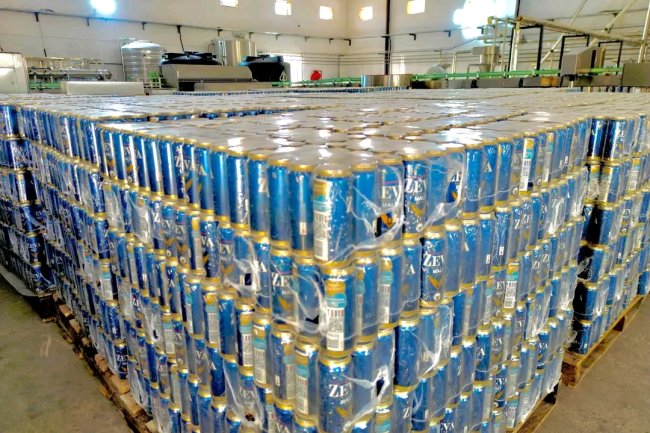
What is the actual cost of producing a unit of ZEVA beer? What is the production capacity of the plant, and how much of that capacity is currently being utilised? What volume has been produced since the advertised commencement of operations? What are the sales figures? Has the company established a credible route to recovering its investment and sustaining its operations? These are the figures that would tell Benue people whether they are witnessing a genuine industrial achievement or an expensive project whose commercial future remains uncertain. Instead, the public is left with announcements, branding and carefully selected images. Apparently, under Alia, the camera must first be convinced that the government is working before the people can begin asking whether the work is delivering results.
Then comes the most fundamental question about ZEVA. Is the beer actually being manufactured in Benue State, or is the product being sourced from elsewhere and marketed under a brand associated with the state? This is a straightforward question that should be settled by a transparent demonstration of the production process. If the brewery is operational, let BIPC show the raw materials entering the facility, the brewing process, the bottling line and the finished products. Let it disclose the date commercial production commenced, the actual volume produced and the operating status of the plant.
There is nothing unreasonable about asking a government owned investment company to demonstrate that an industrial facility it has advertised is genuinely manufacturing the product associated with it. The absence of publicly available evidence does not automatically establish that the beer is manufactured elsewhere. However, neither should Benue people be expected to accept claims of local manufacturing without convincing evidence. If ZEVA is being brewed in Benue, show us the brewery at work. If it is not, the public deserves an honest explanation of what exactly the state has invested in.
There is also the question of local agricultural participation. Benue is an agricultural state, and any brewery presented as an instrument of industrial development should be able to explain how its operations connect with the state's agricultural economy. Guinea corn, among other suitable grains, presents an opportunity for a brewery to explore local sourcing where its production requirements permit.
Which farmers are supplying the brewery? What quantities of grain have been procured from Benue? Which cooperatives, farming communities or agricultural businesses have entered into supply arrangements with the company? What market opportunities has the brewery created for local producers? If the administration has invested in a brewery without establishing meaningful procurement relationships with local farmers, what exactly is the agricultural transformation being advertised? Industrialisation should create an economic chain that connects production, employment, agriculture, distribution and revenue generation. It should not begin and end with the construction of a building, the unveiling of a brand and the circulation of photographs. If local sourcing is not yet taking place, BIPC should say so and explain its plans. What Benue people deserve is an account of the actual economic benefits, not another exercise in public relations.
The disturbing pattern under Alia is the tendency to substitute photo ops for verifiable performance. Government officials pose beside projects, cameras capture carefully selected moments, social media amplifies the images, and the public is expected to interpret the resulting publicity as proof of good governance.
When questions arise about the actual performance of the projects, another announcement or photo opportunity often becomes the answer. This is precisely why the sudden publicity surrounding Taraku Mills deserves scrutiny. The administration may have succeeded in generating footage of production activities, but that does not establish that the factory's water problem has been permanently resolved, that operations are commercially sustainable or that the brewery is performing as advertised. A government that understands accountability should welcome questions about its investments and publish the relevant figures. It should not rely on visual impressions to do the work of operational reports. Benue people are not asking for more footage of government officials celebrating industrial projects. They are asking for evidence that these projects can produce goods consistently, sell competitively, create jobs and generate sustainable economic value.
The Alia administration must therefore stop treating publicity as a substitute for industrial performance. If Taraku Mills has genuinely returned to sustainable operations, let BIPC publish its production figures, explain how the water supply problem has been resolved and demonstrate that the factory can operate consistently beyond staged media appearances. If the brewery is operational, let the company provide comparable evidence of raw material supplies, actual brewing, bottling and finished products. Let it disclose the facility's operating status, production capacity and the extent to which Benue farmers are participating in its supply chain.
These are not unreasonable demands. They are the minimum requirements of accountability when public resources are committed to industrial projects. The suspicion that Taraku Mills is being used to divert attention from unanswered questions about the brewery is not, by itself, proof of a deliberate cover up. But BIPC can put the suspicion to rest by opening both projects to the same standard of public scrutiny. Silence about one facility, accompanied by aggressive publicity around another, will only intensify the questions.
At this point, Benue people must insist on a clear distinction between industrial development and industrial propaganda. Taraku Mills deserves a genuine revival, not a temporary arrangement designed to produce impressive footage. The brewery deserves a transparent assessment of its operational and commercial realities, not endless celebration of its existence as a physical structure and a brand.
The Alia administration cannot continue to use cameras to manufacture the appearance of progress while leaving fundamental questions about infrastructure, production costs, commercial sustainability and local economic benefits unanswered. If the factory is working, show the figures. If the brewery is producing, show the production. If local farmers are benefiting, show the procurement records. The people of Benue did not vote for a government whose greatest industrial achievement is the ability to produce convincing photographs of factories. They voted for leadership that would make those factories work. And if Taraku Mills has suddenly become the administration's preferred showcase, BIPC must answer the question that its livestreams have only made more urgent: why are we being shown Taraku Mills at work while the operational reality of the brewery remains so difficult to see?