300MM CONCRETE: THE ENGINEERING QUESTIONS ALIA MUST ANSWER
Governor Hyacinth Alia's much-publicised Makurdi road projects raise serious questions about engineering specifications, contract costs and value for money. Why is the reported 300mm concrete thickness celebrated on selected roads not consistently maintained across other projects? Were extensive excavations genuinely necessary, or could less expensive rehabilitation methods have preserved existing roads? Benue taxpayers deserve access to approved designs, bills of quantities, materials test results and independent quality assessments. Expensive road construction is not necessarily quality infrastructure, and Alia must explain the engineering and financial decisions behind his much-publicised road legacy.
By Aondoakaa Tersugh Daniel, 08/11/2026
Governor Hyacinth Alia wants Benue people to look at the finished surfaces, the inauguration photographs and the kilometres announced. I am asking them to look deeper. A road is not just excavation, concrete and asphalt. It is an engineering decision that must fit the actual condition of the road, and a financial decision that must respect public money.
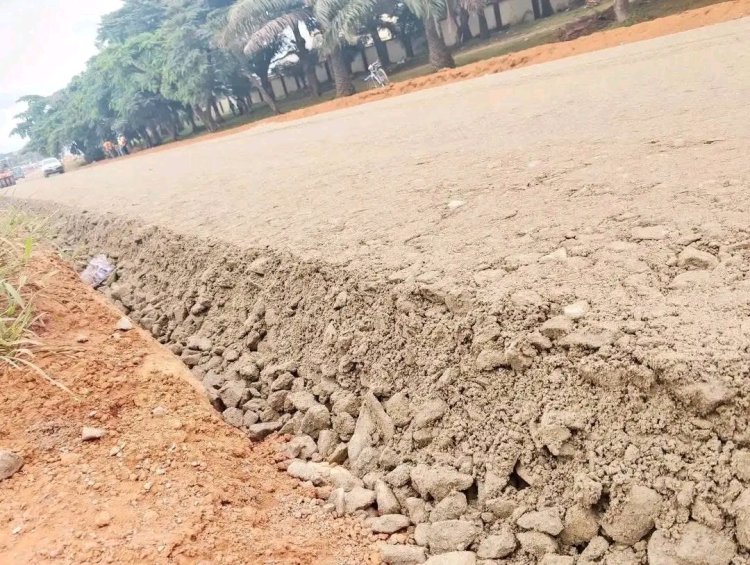
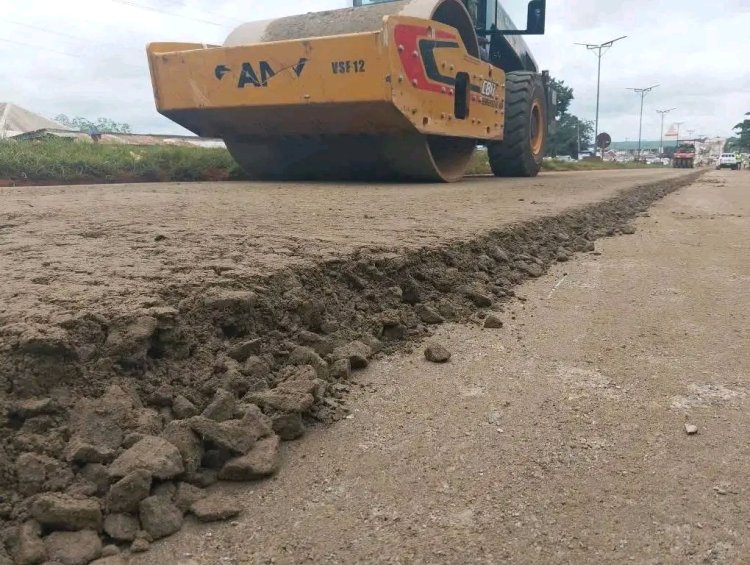
The administration is reported to have used 300mm concrete foundations on some roads, including the Government House Roundabout to Tito Gate road, and it presents this as proof of superior quality. What is the engineering justification? The Federal Ministry of Works Highway Manual does not prescribe one thickness for every road. Design depends on traffic loading, soil bearing capacity, drainage, material strength and intended design life. A 300mm layer may be justified in certain conditions, but thickness alone does not make a road superior. The government must show the calculations behind its decision.
Then comes the inconsistency. If 300mm is the standard that defines quality under Alia, why is it not applied across Makurdi? Were different thicknesses chosen after proper geotechnical and traffic studies, or were they simply chosen? Roads in Abuja under Nyesom Wike have reportedly used 150mm foundations in some places. That does not make those roads inferior or Makurdi's roads wasteful, because the pavement structures and ground conditions must be compared first. But the administration still owes Benue residents an explanation of its own variations. Quality cannot be a political advertisement on one road and an unexplained variation on the next.
The cost question is simple arithmetic. A one kilometre road with a seven metre carriageway needs about 1,050 cubic metres of concrete at 150mm and about 2,100 cubic metres at 300mm. That is double the volume, before other materials and costs are counted. Where the engineering demands it, the extra spending may be justified. Where it does not, taxpayers are paying heavily for a specification that gives them nothing more. This is why the approved drawings, bills of quantities, material test results and payment certificates must not be treated as state secrets. Benue people have a right to know whether what was paid for matches what was delivered.
I am equally troubled by the extensive excavation of roads that were never shown to have failed. Where a foundation is still sound, crack sealing, pothole repair, milling and asphalt overlay can do the job. In February 2025, the Federal Ministry of Works directed contractors not to scarify stable pavements and to adopt milling and overlay where appropriate, precisely to cut costs. Some roads do need deep reconstruction, and nobody disputes that. The question is whether Makurdi's roads were dug up because investigations proved their foundations had collapsed, or because cheaper options were ignored. Residents should not pay for full reconstruction where proper maintenance would have served.
It gets worse where roads were excavated and then abandoned. Who planned these projects? Were the contractors funded? Were the works phased? Why must families endure dust, blocked access and lost business for excavations that never become roads? Starting many projects is not an achievement. The public interest lies in roads that are completed, usable and durable, and every abandoned excavation is a question about planning, supervision, contract management and the use of public funds.
Governor Alia should therefore publish the approved designs, soil investigation reports, concrete strength test results, pavement thickness specifications and bills of quantities for the major Makurdi township roads. Independent engineers should verify that what was built matches what was approved and that the costs reflect the quantities and quality actually delivered. The government should also explain why roads with usable surfaces were so extensively excavated. These are not unreasonable demands. They are the minimum that taxpayers who finance infrastructure can expect.