ALIA IS NOT TINUBU'S POLITICAL MESSIAH IN BENUE
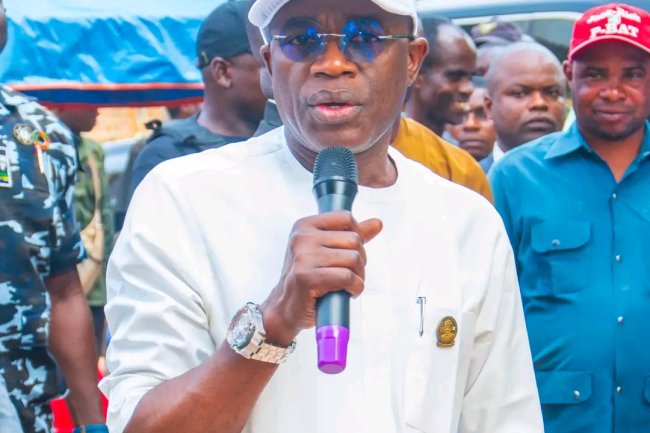
The 2023 presidential election in Benue was shaped by prevailing political circumstances, particularly insecurity and widespread dissatisfaction with the Buhari administration. Tinubu's victory was a collective electoral outcome, not the personal achievement of Governor Hyacinth Alia. As 2027 approaches, Alia's attempt to associate his re-election ambition with Tinubu's second-term project raises questions about political ownership, presidential loyalty and gubernatorial entitlement. Supporting Tinubu does not automatically mean supporting Alia. Benue's governorship contest must remain a separate conversation, with candidates such as Chief Michael Kaase Aondoakaa, SAN, evaluated on their experience, credentials and proposed agenda for the state's future.

By Aondoakaa Tersugh Daniel, 04/11/2026
Benue voters went into the 2023 presidential election with heavy hearts. After eight years of Buhari, a period of killings, burnt villages and displaced farming communities, many saw the contest as a choice between the devil and the lesser evil. Atiku Abubakar's emergence as the PDP candidate did not help matters. His Fulani identity entered the conversation in a state that had buried so many of its own, and for many voters the question went beyond party labels to the survival of Benue itself.
The real contest therefore narrowed to Bola Tinubu and Peter Obi. The Muslim Muslim ticket stirred national controversy, yet the Benue result shows that religion alone cannot explain how people voted. Tinubu polled 310,468 votes, Obi 308,372 and Atiku 130,081. The gap between the first two was 2,096 votes. That is a photo finish, not a landslide, and certainly not a personal mandate for any one man.
After the victory, a story began to circulate among Alia's supporters. According to them, Priest Hyacinth Alia was the Christian leader who talked the Christian community into accepting Tinubu despite the ticket. Some went further and suggested that Tinubu would have lost Benue without him. That claim erases every other APC stakeholder in the state. It also erases the political circumstances of the time and the private calculations of millions of voters who made up their own minds.
So let us ask the obvious question. By what arithmetic did Alia become the sole custodian of Tinubu's victory in Benue? Was the APC a ghost structure before he became governor? Were there no leaders, loyalists, federal appointees and grassroots mobilisers who worked for that result? Did Senator George Akume and the other longstanding stakeholders of the party suddenly become spectators? An election is a collective exercise, and turning it into one governor's personal achievement is a rewriting of history.
Now the same story is being stretched toward 2027. Alia's camp is tying the governor's reelection to President Tinubu's second term ambition, as if the one cannot survive without the other. Supporting a President is a normal political act. Presenting yourself as his messiah in a state is something else entirely. A presidential candidate does not become the property of a governor because they share a party. Neither does loyalty to the President amount to an endorsement of the governor.
The people who delivered 2023 have not gone anywhere. The political establishment around Senator George Akume still matters in the APC calculations, both in Benue and in Abuja. Federal appointees from the state sit on networks that will not vanish because the Government House wants them to. With the Benue APC visibly divided, no individual can claim exclusive ownership of the President's fortunes here. Tinubu's relationship with Benue is bigger than Alia, and it cannot be reduced to one governor's struggle to stay in office.
The two elections must also be kept apart. They are different contests, held on different days and decided by different considerations. Benue voters can decide who sits in Aso Rock and who sits in Government House, Makurdi, without any contradiction. A vote for Tinubu is not a vote for Alia. Likewise, a person who faults the Alia administration is not necessarily an enemy of the Tinubu presidency.
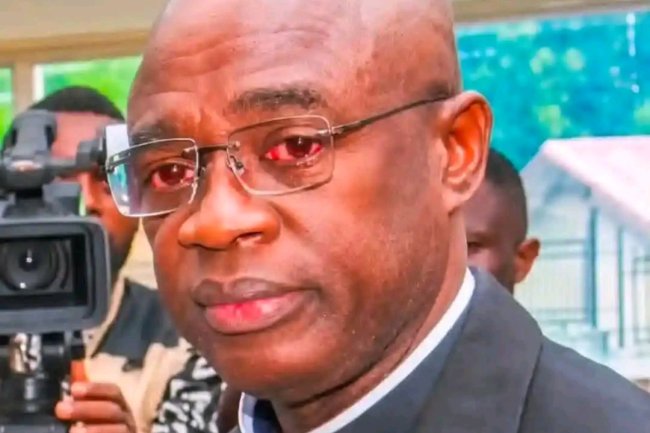
That separation matters most when we turn to the governorship itself. Benue has serious leadership questions to answer, and the next election should be an examination of records, experience, administrative capacity and promises. Chief Michael Kaase Aondoakaa, SAN, is one of the figures who must face that scrutiny. He was Attorney General of the Federation and Minister of Justice, and he is a Senior Advocate of Nigeria. Those credentials give the public something to measure, but they are not a programme. Benue people are entitled to hear what he will do differently and how that experience will improve their daily lives.
The lesson of 2027 is that Benue has two conversations to hold. The presidential contest will follow the choices Nigerians make nationally, and the governorship will decide the direction of our own state. Neither should be turned into a tool for forcing a verdict on the other. Voters have their own reasons for the choices they make, and no officeholder can claim those choices after the results are declared. Tinubu is not Alia's political property, and the future of Benue is not an automatic extension of the President's ambition.