WHY WAS BENUE MISSING WHEN THE MIDDLE BELT MET TINUBU?
Governor Hyacinth Alia must explain what happened to President Tinubu's proposed peace initiative for Benue following the 2025 Yelewata massacre. While Benue's absence from General T.Y. Danjuma's recent Middle Belt delegation to the President has generated controversy, the bigger concern is the fate of the presidential directive to establish an inclusive security committee and meet in Abuja. With Alia pledging ₦1 billion monthly to the Northern Security Trust Fund, questions remain about his commitment to Benue's own security framework, political cooperation and the opportunities already provided by the President.
By Aondoakaa Tersugh Daniel, 07/11/2026
Benue's absence from the delegation of Middle Belt and North Central leaders led by General Theophilus Danjuma to President Bola Tinubu has stirred debate, and understandably so. A state that has suffered years of killings, displaced communities and destroyed livelihoods should not be missing from a high profile meeting on regional security. But I think we are asking the wrong question. The more important one is what happened to the security initiative the President himself opened for Benue in June 2025.
After the Yelewata massacre, President Tinubu did more than pay a condolence visit. He directed Governor Hyacinth Alia to lead an inclusive peace committee of former governors, elders, traditional rulers, Federal Government officials and non indigenes living in the state. The committee was to meet him in Abuja to develop a framework for lasting peace, and he said he was ready to invest in it. That was a direct presidential intervention, and it gave Benue a platform of its own to place its security concerns before the highest office in the land.
The proposed membership was widely reported. It included Senator George Akume, former governors Samuel Ortom and Gabriel Suswam, General Atom Kpera, the Tor Tiv and the Och'Idoma. Akume began consultations with the traditional rulers to implement the directive. So nobody can claim the offer was never made or that names were never submitted. What became of the Abuja meeting, and where is the framework that was supposed to emerge from it?
The governor's priorities in this matter deserve scrutiny. Instead of building the coordination needed to bring Benue's stakeholders together, Governor Alia found it easier to pledge ₦1 billion monthly to the Northern Security Trust Fund. As I have asked before, what informed that commitment? What will Benue get in return? How does a regional contribution of that size answer the attacks on Benue communities? A cheque to a regional arrangement cannot replace the state specific, inclusive engagement the President proposed. The governor owes Benue people an explanation.
There is also a political side to this. The President designed the committee to cut across party and factional lines because he understood that a crisis of this magnitude cannot be solved by the governor's narrow interests alone. Yet the mood in Benue suggests that Governor Alia accommodates people when they serve his re-election plans and avoids them when cooperation is needed on security. He has built structures for a second term and placed political leaders on a campaign team. Why, then, has a united front on security become such a hard assignment? Security should be a far stronger reason for cooperation than the ambition to retain power.
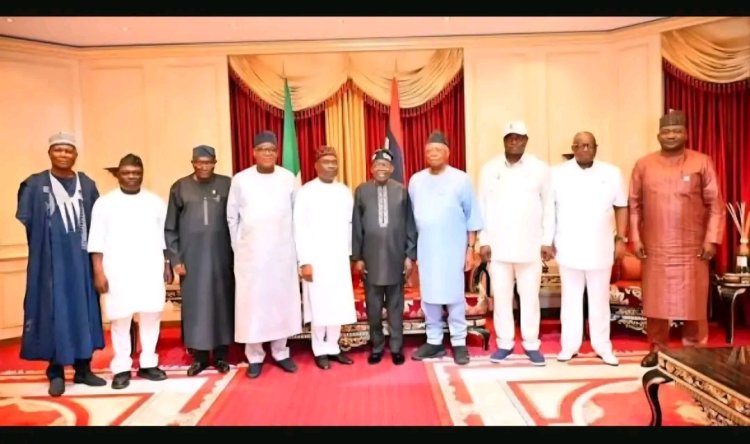
The Danjuma delegation itself raises its own questions. Reports say it included Plateau Governor Caleb Mutfwang, Taraba Governor Agbu Kefas, Defence Minister General Christopher Musa, former Speaker Yakubu Dogara, General Ishaya Bamaiyi, businessman Thomas Etuh and Dr Poju Bitrus, among others. No Benue governor or identifiable Benue political leader appeared on the published list. Dogara also disclosed that the delegation discussed regional development and ways of mobilising support for President Tinubu ahead of the 2027 general elections. So this was a security petition and a political conversation at the same time, and Benue's leadership was not in the room for either.
That should worry us. A state fighting for survival cannot afford to be missing where its regional interests and political future are being discussed. Influence is not proven by campaign structures, endorsements and declarations of loyalty. It is proven by the ability to secure a seat at the table when national conversations are held.
The greatest tragedy would be for this debate to end without anyone demanding accountability for the 2025 peace initiative. Benue did not need General Danjuma to carry its concerns to the President, because the President had already opened the door. Governor Alia must tell us whether the Abuja meeting took place. If it did, what was agreed and what has been implemented? If it did not, why not? These questions must not be buried under arguments about who was invited to the Presidential Villa.
The people of Benue are not asking for ceremonial representation or photographs with the President. They want protection, the safe return of the displaced to their ancestral homes and the restoration of their livelihoods. If Governor Alia could not sustain a peace initiative the President personally proposed, then Benue has every right to demand answers. The absence from Danjuma's delegation is unfortunate, but the silence on Tinubu's earlier intervention is more consequential. BENUE DOES NOT JUST NEED AN INVITATION TO ASO ROCK. IT NEEDS LEADERSHIP THAT KNOWS WHAT TO DO WITH THE OPPORTUNITIES ALREADY GIVEN TO IT.