ALIA'S SECURITY AMBITION: FIGHTING INSECURITY OR BUILDING AN ARSENAL OF POLITICAL POWER?
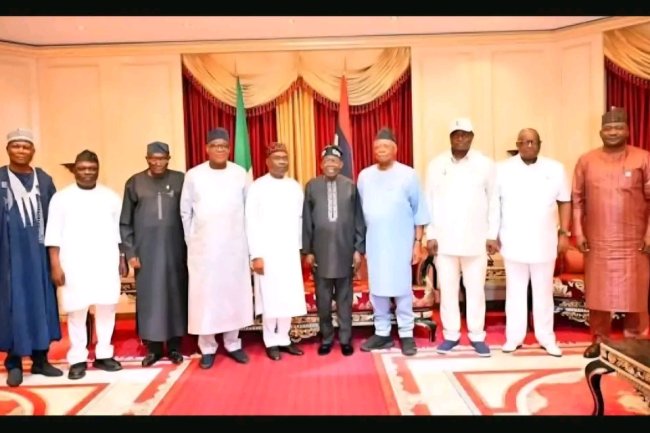
Governor Hyacinth Alia's enthusiasm for the Northern Nigeria Security Trust Fund and State Police raises important questions about funding transparency, legislative backing and the potential abuse of security institutions. With the Northern governors committing ₦1 billion monthly per state to regional security, Alia must disclose Benue's actual contributions and the benefits received. The commentary also highlights an apparent inconsistency between his earlier argument that Benue's Anti-Open Grazing Law lacked national legislative backing and his enthusiasm for regional security arrangements whose legal and operational frameworks require clarification. Against the backdrop of the approaching 2027 elections and concerns about political intolerance, the governor must explain what safeguards will prevent State Police from becoming instruments of political intimidation. Benue needs accountable security institutions that protect citizens, not structures that could be exploited to preserve p
By Aondoakaa Tersugh Daniel, 30/10/2026
I find it curious that Governor Hyacinth Alia is so eager to build new security structures just as Benue enters another electoral season. He has committed to the Northern Nigeria Security Trust Fund, and he has backed State Police. No one should quarrel with a governor who wants to protect lives and property. But when that governor has shown a troubling intolerance for opposition, handing him more security power is a matter the public must scrutinise. Security institutions exist to protect citizens, not to give incumbents more tools of control.
On 1 December 2025, the Northern States Governors' Forum and the Northern Traditional Rulers' Council announced a regional security trust fund. Each of the 19 northern states was to contribute ₦1 billion monthly, together with their local governments. The Board of Trustees was inaugurated in July 2026. If the original arrangement holds, that is ₦19 billion every month.
So how much has Benue actually paid? What has the state received in return? Where are the financial statements showing receipts, spending and the security interventions funded? A governor who is quick to commit public money must be just as quick to account for it. Benue taxpayers deserve more than photographs from security meetings and announcements of pledges.
The legal question is even more pressing. When the Southwest governors set up Operation Amotekun, the Federal Government insisted on proper legal instruments, and the six states went on to enact their own laws defining its structure, powers and operations. That was necessary because a security outfit exercising public authority cannot run on political agreements between governors.
What law supports the Northern arrangement? Have the state assemblies authorised any common operational security organisation, or is this only a financing and coordination platform? If it is only a trust fund, the government should say so plainly. If it is meant to back an operational force, Benue people are entitled to know its enabling laws, the limits of its powers, its command structure and how its personnel will be held accountable. Political enthusiasm is no substitute for legal authority.
This brings me to Alia's own record on legislative backing. In July 2025, his administration argued that the Anti Open Grazing and Ranches Establishment Law was hard to enforce because it lacked national legislative support. A law passed by the Benue State House of Assembly was, in effect, blamed on the absence of a federal framework.
Yet the same governor now embraces a 19 state security arrangement whose legal and operational framework is still unclear. Why does the lack of national backing block his own anti grazing law but not this? Is legislative backing important only when he needs an excuse for failure? Alia owes Benue an answer.
Then there is State Police. On 16 September 2026, the National Assembly sent the proposed constitutional amendment to the state assemblies. On 20 October, the Benue State House of Assembly approved it. I have no objection to State Police in principle. Given the killings in Benue, decentralised policing could improve intelligence gathering, speed up response and strengthen community protection.
The real question is whether the political environment under Alia offers enough guarantees that such a force will serve the public and not the administration. The timing matters. The 2027 elections are close, and the governor's relationship with sections of the opposition grows more hostile by the day. Citizens have every right to ask for safeguards now.
Who will control recruitment? Who will decide deployment? What will stop political considerations from shaping appointments? Can a governor direct State Police to investigate his opponents, disrupt lawful political gatherings or intimidate citizens? Which independent body will investigate abuses by officers?
These questions are not meant to block State Police. They are what any responsible government must answer before asking citizens to surrender more coercive power to a new institution. Being democratically elected does not give a governor unlimited authority over the rights of those he governs.
There is also the matter of what Alia has done with the structures he already has. After the Yelewata massacre, Governor Abdullahi Sule of Nasarawa reportedly said that information about the movement and camping of the suspected attackers had been shared with the Benue government before the attack. Concerns have repeatedly been raised about warnings of attacks on vulnerable communities that were never turned into preventive action.
Benue already has a Bureau of Homeland Security, a Community Volunteer Guards structure and a law against open grazing. The administration has also promoted technological surveillance and intelligence gathering. What has any of this delivered? How many attacks have been stopped through intelligence? What became of the information generated by the Benue Geographic Information System and other monitoring arrangements? Before building new institutions and pledging billions to regional schemes, Alia should show what the existing ones have achieved.
My deepest worry is political abuse. I am not saying State Police should be rejected because Alia is governor, or that every regional security initiative is an electoral scheme. But the character of the administration implementing these reforms cannot be separated from the safeguards citizens need. Nigeria has seen security agencies accused of being used against political opponents instead of serving as neutral enforcers of the law. Uganda shows what happens when security institutions become tied to partisan interests, especially during elections.
Benue must not create an environment where armed personnel are used to intimidate opposition figures, restrict political participation or protect an incumbent's electoral interests. State Police must belong to the people of Benue, not to the governor, his associates or whichever party holds Government House.
The governor must therefore explain why he is so eager to expand security structures while the effectiveness of existing ones, the transparency of regional funding and the legal basis of the new arrangements all remain in doubt. How much has Benue contributed to the Northern Nigeria Security Trust Fund? What legislation supports its participation? What operational authority will the regional arrangement exercise? What independent safeguards will protect Benue citizens from abuse by State Police?
A government that doubted the enforceability of its own Anti Open Grazing Law for lack of national backing must now prove that its appetite for new security arrangements is matched by legal and institutional preparation.
Alia should understand that security is not about recruiting more personnel, creating more agencies or announcing bigger financial commitments. It is about protecting citizens, respecting constitutional freedoms and keeping the instruments of state coercion accountable to the law. The 2027 elections will come and go, but the institutions created today may stay in Benue for generations. They must never become the inheritance of one administration or tools of an incumbent's ambition.
Benue needs institutions that protect every citizen regardless of party, not institutions whose loyalty depends on who sits in Government House. The governor must convince the people that his enthusiasm for State Police and regional security arrangements is about securing Benue, not securing political power.