ALIA MAY BE THE NEXT POLITICAL OBSTACLE ON WIKE'S RADAR
Alia's rejection of the Benue Coalition for Tinubu 2027 raises questions about his understanding of coalition politics. If Akume and Ortom could work towards Tinubu's emergence in 2023 despite belonging to different political camps, why should their renewed alliance threaten his re-election in 2027? Having failed to stop Wike's Rainbow Coalition in Imo, Hope Uzodimma's experience should serve as a warning to Alia. Is the governor defending Tinubu's interest or protecting his own second-term ambition?
By Aondoakaa Tersugh Daniel, 13/11/2026
Governor Hyacinth Alia is walking into a confrontation whose consequences he has not fully weighed. His campaign council has issued a press release rejecting the Benue Coalition for Tinubu 2027 and declaring opposition to any coalition arrangement in the state. That is not mere disagreement. It shows a governor uncomfortable with a political movement he cannot control.
A governor confident of his strength has no reason to fear an alliance that professes support for President Bola Tinubu's reelection. So we must ask: is support for Tinubu now supposed to depend on support for Alia's second term ambition?
Alia should study the experience of Governor Hope Uzodimma. He declared that there would be no Rainbow Coalition in Imo State and even tried to discourage it. Today, the coalition remains a force in Imo politics. His position as Chairman of the Progressive Governors Forum did not give him the power to decide every political arrangement in the country.
Declaring that a coalition will not exist does not make it disappear. Uzodimma became an obstacle on the Rainbow Coalition's path, and Alia is now positioning himself to be the next one.
The Alia Campaign Council must also explain the logic behind its claim that the coalition will undermine Tinubu's chances in Benue. How does an alliance involving the serving Secretary to the Government of the Federation, Senator George Akume, work against the President's electoral interest? Whom does the SGF intend to work for, if not the President whose government he serves? Akume has consistently shown commitment to Tinubu's political project, so why would he suddenly become an obstacle to it?
The same question applies to Chief Samuel Ortom. He has publicly declared his support for Tinubu in 2027, and nothing has changed in that position. His disagreement with Alia does not translate into opposition to the President. The Campaign Council cannot equate opposition to Alia's second term with opposition to Tinubu.
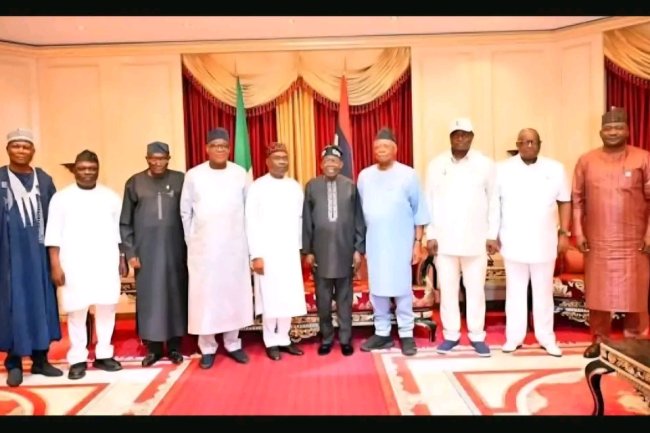
There is also history that the council should not conveniently ignore. In 2023, Akume and Ortom belonged to different political camps, yet both took part in the wider arrangements that produced Tinubu's emergence as President. The G5 governors met Tinubu in London and agreed a formula to support his candidacy. Whatever individual arrangements followed, the common objective was clear.
Akume and Ortom did not need the same party or the same camp to work towards that objective in 2023. What then makes their renewed cooperation a threat to Tinubu in 2027? If anything, bringing these influential stakeholders together offers another chance to consolidate support for the President. The council must explain why people who once worked for Tinubu's success are now presented as a danger to his reelection.
Alia's own strategy contradicts his position. He has reportedly been exploring relationships with stakeholders outside the APC, including former PDP National Chairman Senator Iyorchia Ayu and a faction of the Accord Party. He values alliances when they serve his interests. When others build an arrangement that does not revolve around his governorship, he suddenly finds reasons to reject coalition politics.
Does Alia believe coalition building is legitimate only when he is in charge? Why should the SGF, Chief Ortom and their associates surrender their political choices because the governor wants to dictate the direction of the 2027 contest?
The Coalition for Tinubu 2027 cannot be dismissed with a campaign council statement. It brings together Akume's national influence, Ortom's political constituency and Wike's national connections, alongside other stakeholders. The alliance has also separated its presidential objective from the governorship contest. That distinction matters, because supporting Tinubu's reelection does not mean supporting Alia's second term.
Wike has reportedly warned that some APC governors could be flushed out after the presidential election. Alia should consider what that means for his confrontation. Controlling Government House is not the same as controlling every political calculation in Benue or at the national level.
Rejection is not victory, and a governor's press release is not a substitute for political influence. Alia must stop presenting every arrangement outside his control as an attack on President Tinubu. Akume and Ortom have their own relationships, constituencies and national engagements, and their decision to work together is not a conspiracy against the President.
If Alia keeps treating the coalition as an enemy of Tinubu only because it does not place his ambition at the centre, he risks turning a disagreement over Benue's political future into a much wider confrontation. The stakeholders on the other side have influence that extends well beyond the state.