KEFAS MADE PEACE WITH DANJUMA, ALIA IS STILL AT WAR WITH AKUME: THE OPENING FOR AONDOAKAA
The political contrast between Taraba and Benue is becoming increasingly significant ahead of the 2027 elections. Governor Agbu Kefas appears to have recognised the importance of reconciling with General TY Danjuma and bringing key stakeholders together, while Governor Hyacinth Alia continues to sustain his political confrontation with Senator George Akume despite presidential and party interventions. With Akume having little to lose in the prolonged struggle, Alia risks entering the election season with unresolved divisions and a weakened political structure. That failure creates the opening Chief Michael Kaase Aondoakaa SAN is positioned to exploit. As the PDP consolidates around Aondoakaa, the unresolved crisis within the APC becomes another factor working against Alia's political ambitions and in favour of Aondoakaa's victory in 2027.
By Aondoakaa Tersugh Daniel, 15/11/2026
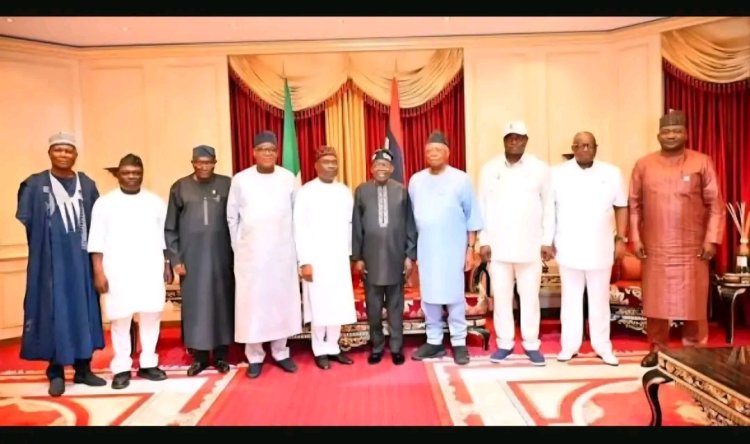
When General Theophilus Yakubu Danjuma led a delegation to President Bola Tinubu at the Presidential Villa on November 6, one face in that delegation carried a message of its own. It was Taraba State Governor Agbu Kefas. His presence mattered because of the history behind it, not because he is a sitting governor.
For months, Taraba was full of talk that Kefas and the retired general had fallen out. Danjuma is a heavyweight in that state, and he is closely linked to how Kefas became governor. Kefas did not leave the story to rumour. He kept dismissing reports of a rift and kept showing up in ways that affirmed the relationship. Standing beside Danjuma at the Villa was the public seal on that effort. It told Taraba that whatever disagreement existed would not follow them into another election cycle.
That may well be Kefas's saving grace as he heads into his reelection bid. Incumbency alone does not carry a governor. He needs influential stakeholders on his side, a party structure that works and the assurance that his benefactors are not pulling in different directions. Kefas seems to understand that a political quarrel, however serious, must give way to a shared objective. The reconciliation does not guarantee victory, but it removes a major source of uncertainty.
Now look at Benue. Governor Hyacinth Alia and Senator George Akume, the Secretary to the Government of the Federation, have gone the opposite way. The President publicly urged them to settle. The national party stepped in. A reconciliation process was held and a meeting took place. Months later, the two camps are still fighting over party structures, political inclusion and who controls the President's reelection campaign in Benue. The November 15 developments around rival campaign arrangements show that none of those interventions produced a lasting peace.
The contrast between the two governors is instructive. Kefas treated his relationship with Danjuma as too important to leave unrepaired, and he knew that facing an election with a powerful stakeholder as an adversary would be costly. Alia has allowed his dispute with Akume to harden into a permanent contest, even after the President and the party offered him a way out. His supporters will have their explanations and Akume's camp will have its grievances, but the result is plain. Benue's ruling party is moving toward 2027 with no settlement between two of its most consequential figures, and the President's own campaign has become another battleground for them.
The damage does not stop with the two men. Party stakeholders, elected representatives and ordinary supporters are being forced to pick a side. Mobilising for Tinubu has become harder in a state where the governor and the SGF should be coordinating. Akume's position that support for Tinubu does not automatically mean support for Alia exposes a distinction the governor's camp has never been able to absorb. No state should have to choose between backing the President and keeping faith with powerful figures in the same party. Benue has been placed in exactly that position, and everyone can see it.
This is where Chief Michael Kaase Aondoakaa SAN comes in. He did not create the Alia and Akume quarrel, but he stands to gain from it. While the governor spends his energy on an internal war, Aondoakaa is building an alternative coalition and putting a credible case before the people of Benue. He has no need to wait on the APC's internal negotiations. He is reaching out to established leaders, disappointed stakeholders and communities looking for a new direction. Chief Samuel Ortom is providing leadership in the PDP, and Akume's network remains a factor in every serious calculation in the state.
The 2027 election in Benue will therefore be more than a contest between an incumbent and a challenger. It will test what reconciliation is worth and what it costs when disagreements are allowed to become permanent. Kefas repaired a vital relationship before facing the voters. Alia, with every intervention available to him, has not done the same with Akume. Aondoakaa's task is to make sure that while the ruling party stays busy with its wounds, the PDP offers Benue a coherent alternative built on leadership, inclusion, security, economic development and accountable governance. Kefas has shown the value of making peace before seeking a mandate. Alia is yet to heal his own house. Aondoakaa can make that difference the defining issue of 2027.