FROM MIYETTI ALLAH TO THE MARCOPOLO BUS: QUESTIONS ALIA MUST ANSWER
Who are the people behind the Marcopolo bus presented to Governor Alia on 2 November, and what organisation does their chairman, Musbahu Ahmed Usman, represent? From the unresolved Miyetti Allah endorsement controversy to this mysterious campaign donation, Benue deserves answers about the identity and interests of those seeking political influence around its governor.
By Aondoakaa Tersugh Daniel, 11/11/2026
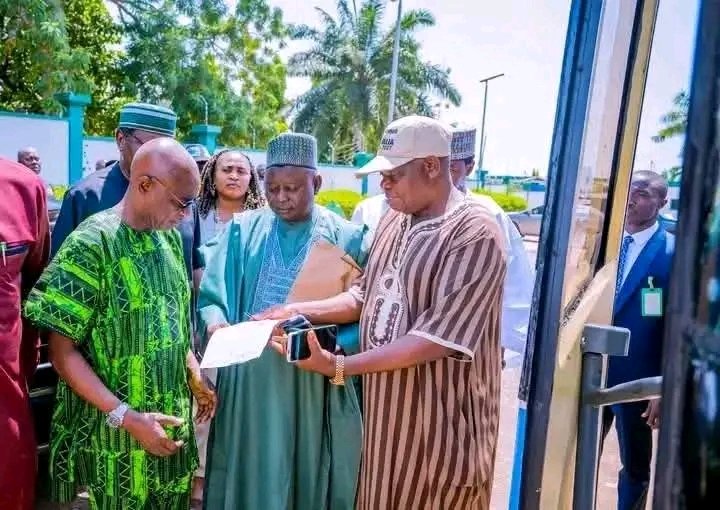
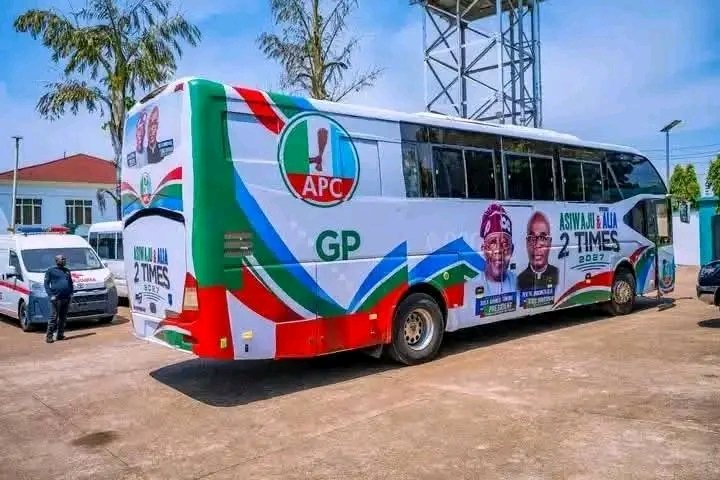
On 2 November 2026, the Benue State Government publicised the presentation of a Marcopolo bus to Governor Hyacinth Alia. The donors were a delegation led by one Musbahu Ahmed Usman, described as its chairman, and reportedly including Hon. Salisu El-Jibril Doguwa, Abba Ahmad, Abubakar Dalhatu and Dr. Mujaheed Bala. The government said the gift was to support the Tinubu/Shettima and Alia/Odeh 2027 campaign. Supporters donating vehicles to the candidates they back is nothing new. What is new is an official announcement that celebrates a delegation without telling the public who they represent.
The statement calls Musbahu Ahmed Usman a chairman but never names the organisation he chairs. Chairman of what? A political association, a northern coalition, a pastoralist body, a business consortium or a campaign support group? Who authorised this delegation to make such a politically weighty gesture? These are not idle questions. A government that considers the presentation important enough to publicise should consider the identity of the donors equally important. A list of names is not an organisational identity, and a photograph of a bus is not an explanation.
The silence becomes more troubling when placed beside the earlier controversy over the alleged endorsement of Alia by Miyetti Allah Kautal Hore. I wrote about reports that the group had backed him for a second term and described him as a dependable friend of the Fulani, with a promise to mobilise support for his re-election. The government never offered a clear and firm response to put the matter to rest. Benue has suffered years of killings, displacement and insecurity. An endorsement from an organisation whose name has featured in public controversies over pastoralist activities cannot be treated as routine politics. The people were owed an explanation then, and they are still owed one.
Now another delegation has arrived with another substantial gift, and again the government has not said who they are. Is this group linked to Miyetti Allah Kautal Hore, MACBAN or any other pastoralist body? Is it a coalition of individuals from one state or region? Does Musbahu Ahmed Usman speak for an established organisation or for private persons? Let me be clear that I am not asserting this delegation belongs to Miyetti Allah. My complaint is that the government has given the public too little information to know. Benue people should not be left to guess who is being celebrated as the governor's supporters.
The gift itself also raises questions. A Marcopolo bus is not a campaign souvenir. It is a costly logistical asset. Who paid for it? Who holds the ownership documents? Did the named individuals donate it, or did an organisation whose name was left out? Which political constituency will benefit from its use? If an organised interest stands behind this donation, the people of Benue have every right to know that interest. The government cannot ask us to applaud the gift while treating the identity of its source as unimportant.
Benue is not an ordinary political environment where the identity of influential outside interests can be waved away. The state has paid a heavy price for insecurity. Thousands of our people remain displaced, and whole communities have been devastated. Who gains access to political power and influence is therefore a matter of legitimate public concern. Any organisation seeking a political relationship with this government must be ready to identify itself. A governor cannot ask for the confidence of Benue people while leaving questions about his benefactors unanswered.
The question is not whether Alia may accept a bus from his supporters. He is entitled to support from anyone willing to give it. The question is why the government is keener on publicising the presentation than on explaining who stands behind it. If the delegation has no link to the organisations named in the earlier controversy, a simple clarification will settle the matter. If it represents another identifiable political or social body, the public deserves to be told. If the government keeps hiding behind photographs, ceremonies and carefully worded statements, it should not be surprised when its silence raises more questions than the donation answers.
Benue people are not demanding the registration papers of every visitor to Government House. They are asking a government that keeps presenting endorsements as proof of growing support to state the identity and standing of those it chooses to celebrate. A governor seeking another four years should not be surrounded by mysterious delegations whose identities cannot be established. The people deserve to know who is backing Alia, what interests they carry and what relationships are being built in their name. A Marcopolo bus may improve a campaign's transport capacity, but it cannot carry the government away from its duty to answer legitimate public questions.