WHO IS AFRAID OF AONDOAKAA'S FUNDRAISING?
The commentary exposes the irony of Governor Alia, whose 2023 political emergence was funded by contributions from individuals and groups, now having his appointees question Aondoakaa's fundraising arrangements. It recalls those who financed Alia's rise and questions why an incumbent with access to enormous public resources is preoccupied with his opponent's campaign financing rather than accounting for Benue's money.
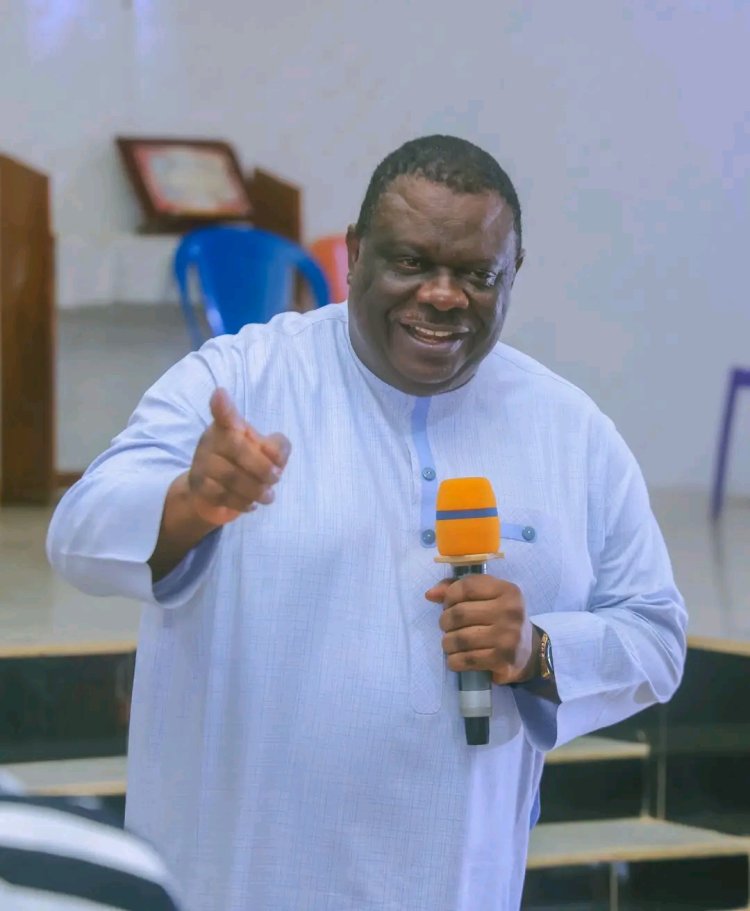
By Aondoakaa Tersugh Daniel, 30/10/2026
To know the character of a man, give him power. The making of Governor Hyacinth Iormem Alia proves it. He walked into politics with nothing and had to be clothed. Senator George Akume handed him the political platform, while a long list of individuals and groups carried the financial burden of making him governor. Alia's emergence was a crowdfunded project. That should surprise nobody, because a former priest who reportedly made a living selling water and salt, and who is said to have collected money even from poor widows, was never going to be embarrassed by receiving contributions for his ambition.
This morning, an appointee of Alia announced on social media that Chief Michael Kaase Aondoakaa SAN is making arrangements to raise funds for his campaign. There is nothing wrong with that. Campaigns cost money, and citizens are free to support candidates they believe in. But it raises a question worth asking. If we strip away the enormous financial advantage that President Tinubu's increased allocations have handed to state governors, could Alia match Aondoakaa in a contest for financial support?
Fundraising is a settled feature of democratic politics. In the United States, candidates hold fundraising dinners, receptions and donor meetings, and they appeal openly to the public. Presidential and congressional campaigns run on contributions from ordinary citizens, wealthy donors, party supporters and Political Action Committees, and the 2024 presidential election again showed how central money is to the process. The Federal Election Commission regulates it through contribution limits, disclosure rules and reporting obligations. For the 2025 to 2026 cycle, an individual may give up to $3,500 to a federal candidate per election. Fundraising is therefore no admission of weakness and no proof of wrongdoing. What matters is that contributions are lawful, their sources are transparent and spending is accounted for. If that is acceptable in the United States, why should a Nigerian politician be ridiculed for mobilising support for his campaign?
Perhaps Alia needs a reminder of how his own campaign was funded, and of the people he should naturally remain indebted to but has chosen, for reasons best known to him, to betray or abandon.
Let me start with the Benue community in Lagos. Men like Engineer Gasara led members of the community to contribute substantial sums, running into hundreds of millions of naira, towards the Alia campaign. In Abuja, the Alia Alliance organised its own fundraising exercise, which reportedly raised hundreds of millions of naira that were handed over to Alia. Engineer Peter Ashiekaa was among those who led the Alliance in mobilising those contributions. Questions have since been raised about how those funds were accounted for.
There were individual contributors too. Dr Matthias Byuan has said plainly that he gave Alia hundreds of millions of naira, which Alia personally lifted in a bag and carried to his vehicle. Let Alia deny it if he can. A group allegedly linked to Nasir El-Rufai and certain Fulani interests was also said to have given over N70 billion to the campaign. Even poor widows in Benue contributed to his emergence.
All these people and groups invested their resources, relationships and goodwill in the project that produced Governor Alia. Today, many of them have been abandoned or find themselves on the receiving end of his administration's political decisions. Even more remarkable is that, with the enormous public resources now at his disposal as governor, it still took contributions from Benue pensioners to buy his 2027 governorship nomination form. Alia was, and remains, a ripper.
The significance of the 2023 fundraising was not only the money raised. It showed how widely his candidacy was accepted and how willing people from different backgrounds were to take collective responsibility for making him governor. Now Aondoakaa is attracting endorsements and support from individuals and groups, including some who played major roles in Alia's emergence. That significance should not be lost on anyone. The same people who once rallied around Alia are prepared to invest their confidence and resources in another political project.
In the case of Saul, the Spirit of God departed from him. In Alia's case it is worse, because the Spirit of God has left the apostate priest and the people who once rallied behind him have turned their backs as well.
The question, therefore, is not whether Aondoakaa is raising funds. Fundraising is a legitimate part of democratic politics. The real question is why an incumbent governor, with access to enormous public resources that his administration has yet to account for convincingly, should be so preoccupied with how his opponent intends to finance a campaign. Why is Alia's political machinery more interested in counting Aondoakaa's fundraising arrangements than in accounting for the resources entrusted to the government of Benue State?