THE LEGACY CHASE: HOW ONE MAN'S EGO HAS BECOME BENUE'S INDUSTRIAL POLICY
By Aondoakaa Tersugh Daniel, 23/10/2026
Governor Hyacinth Alia's industrialization drive is not an economic strategy. It is a mirror, and the man standing before it is admiring only himself. What is being presented as economic transformation increasingly looks like a desperate contest to outshine the legacies of past governors. Rather than consolidating existing investments, repairing failed institutions and building on what previous administrations established, Alia appears determined to build his own versions of everything. The question is no longer simply what he is building, but why he is building it when the state already has institutions and assets that could serve the same purposes. Is this industrialisation, or an expensive exercise in political ego?
Look at the pattern, because it is too consistent to be an accident. Every major project under the Benue Investment and Property Company sits in the shadow of a predecessor's legacy. The Governor is not building for Benue. He is building against the men who came before him.
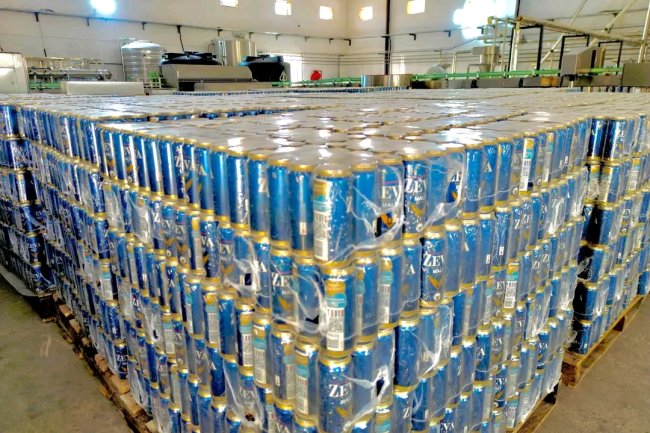
Start with the brewery. Aper Aku built the Benue Brewery. Chief Gabriel Suswam subsequently sold off 85 per cent of the state's shares in the company, weakening the state's ownership and control. Yet the brewery's troubled history does not automatically make its revival impossible. A serious government could explore its remaining ownership position, assess the company's liabilities, attract investors and determine whether rehabilitation offers better value than starting afresh. Instead, the Alia administration has pursued a new brewery project. Why build another brewery before convincingly demonstrating that reviving the existing one is economically unviable? But Aper Aku had a brewery, so Alia must have a brewery. The new one is reported to cost ₦15 billion, and no serious sustainability plan has been shown to the public.
Then came the university. The Rev Fr Moses Adasu administration established Benue State University, so Alia had to establish his own state university at Ihugh, in his home town. While the new campus was taking off, BSU was allowed to slide into a historic and prolonged shutdown. Did it matter? Not to the Governor, so long as Ihugh was rising.
The prolonged shutdown of Benue State University exposed the contradictions in the educational priorities of the Alia administration. Students lost valuable academic time, families endured uncertainty, and the university community experienced the consequences of the disruption. Meanwhile, other tertiary institutions across the state have also been affected by strikes. These are not hypothetical concerns about what might happen in the future. They are realities that have already confronted students, parents, lecturers and other workers. What is the value of establishing another university when existing institutions cannot consistently guarantee uninterrupted academic activities? A new university cannot erase the disruption suffered by students elsewhere. Educational development must be measured by the quality and stability of the entire system, not merely by the number of institutions a governor establishes.
Benfruit tells the same story. Senator Dr George Akume built it, and all it needed was a serious investor to return to production. Instead, Alia must have Bensono. Reviving Benfruit would have credited Akume, and that is a price this Governor will not pay. Why create a new company without first presenting a convincing explanation of why reviving Benfruit was impracticable? Was the existing company beyond redemption, or was a new enterprise simply more attractive because it could be presented as Alia's own achievement?
Chief Gabriel Suswam's administration was closely associated with the Greater Makurdi Water Works project. Yet, under Alia, BIPC has announced the test run of a newly established water treatment facility, while the operational status and prospects for the Greater Makurdi Water Works remain unanswered questions. Why establish another water supply facility without first providing a clear account of the existing waterworks? Is the government addressing a genuine infrastructure gap, or is it once again creating its own version of an existing legacy? Benue deserves an explanation of what has become of the Greater Makurdi Water Works and why the administration's industrialisation agenda appears to be moving forward without resolving the questions surrounding it.
Chief Samuel Ortom established the Livestock Guard to enforce the state's Open Grazing Prohibition and Ranches Establishment Law. But Alia had to have his own security outfit, the Civil Protection Guard, popularly known as Anyam Nyor, meaning “the lion has arrived.” Yet, for an administration that appears obsessed with replacing the legacies of its predecessors, the question is whether this new outfit represents a necessary improvement or merely another opportunity to imprint Alia's identity on state institutions. Beyond the name and fanfare, what fundamental gap in the existing security architecture did it fill? Was it necessary to establish another outfit instead of strengthening existing structures and ensuring that the law against open grazing was effectively enforced? Apparently, even the enforcement of an existing law must give way to Alia's appetite for creating his own legacy.
Now he is competing with private citizens. Benue businesses were already doing the state proud in bread and water production, yet the Governor must have his own bread and his own water. A government that should be clearing the road for private enterprise is parking its vehicle on it.
What precise market failure justified these interventions? Was there a shortage that private operators could not meet? Were prices unaffordable? Was existing production inadequate? Would government participation expand supply, improve quality and lower costs for consumers? Or did the administration simply decide that because private individuals were making a mark in these sectors, the government must also establish its own operations?
The goal is plain: Alia wants his name heard above everyone else's. Whether these so called legacies can survive beyond his tenure is not his concern. What matters to him is the applause of mediocres who tell him he is doing great things. It is the same appetite that gave Benue a 2035 summit with no investors in the room.
Benue's resources are too precious to become instruments of political one-upmanship. The people need functioning industries, reliable public services, sustainable jobs and institutions that will outlive the administration that established them. They do not need an endless cycle of replacing old projects with new ones merely to create fresh political talking points. If Alia's industrialisation drive is genuinely about the people, the evidence should be visible in transparent feasibility studies, credible rehabilitation assessments, sustainable enterprises and measurable improvements in the lives of ordinary citizens.
These interventions are unnecessary, and BIPC has become the instrument of the vanity. What Alia needs is therapy, not ego massage.