BURNING SACKS, NEGLECTING FARMERS: THE MISPLACED PRIORITIES OF ALIA'S GOVERNMENT
The public burning of confiscated oversized sacks raises questions about wastefulness, misplaced priorities and the Alia administration's understanding of agricultural protection. With BIPC operating a Polythene and Nylon Printing Factory, why was the possibility of recovering and recycling the confiscated materials not explored? More importantly, while the government celebrates protecting farmers' earnings in the markets, thousands of farmers remain displaced and unable to access their ancestral farmlands. How many have returned home and resumed farming? Benue needs more than dramatic market enforcement exercises. It needs security for farmers, restoration of agricultural livelihoods and policies that prioritise productive use of resources over publicity.
By Aondoakaa Tersugh Daniel, 15/11/2026
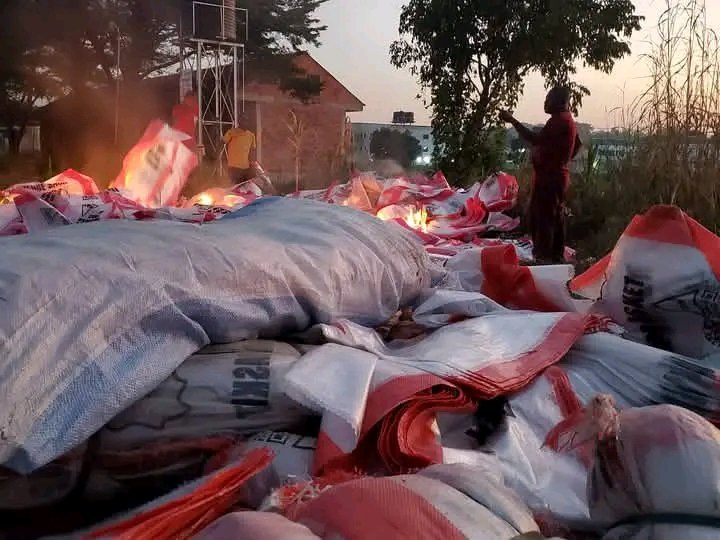
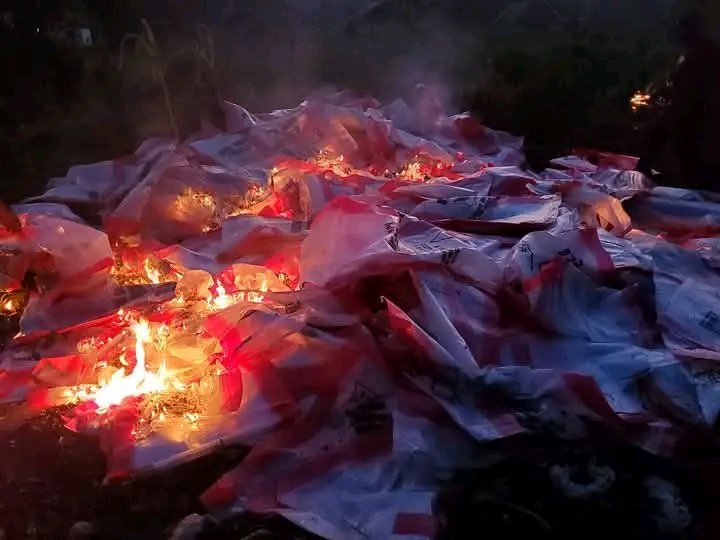
I have followed with serious concern the publicity surrounding the confiscation and public burning of over 10 bales of oversized customised sacks by Hon. Chief Imoter Akaager, Special Adviser to Governor Hyacinth Alia on LGA Market Coordination and Monitoring. The government says unscrupulous buyers used the sacks to cheat farmers by measuring more produce than they paid for. Farmers deserve protection from dishonest trading, and the government has every right to enforce standard measurements in our markets.
My objection is to the method. Why were the sacks set ablaze when they could have been converted to approved standard sizes, repurposed or recycled? Was burning the only option? Was any assessment done to determine the most economical and environmentally responsible way to dispose of them? More importantly, what consideration was given to the Benue Investment and Property Company (BIPC), which operates a Polythene and Nylon Printing Factory that produces plastic packaging materials, including sacks? Could the confiscated sacks not have been evaluated for material recovery and recycling through BIPC's production processes, potentially providing raw materials for the manufacture of new sacks? If the materials were technically compatible with its production requirements, why destroy what could have been recovered as industrial input?
Surely, a government that invests in local manufacturing should be interested in exploring opportunities to recover economic value from materials it confiscates. Confiscating suspected instruments of exploitation is one thing. Burning them publicly for the cameras, without explaining why an existing state-backed industrial facility could not have been considered for their recovery, is another. The government must tell us what the fire achieved that confiscation, standardisation, appropriate sanctions and possible material recovery could not.
There is also a larger contradiction. Since when did protecting farmers begin and end with the bags used to measure their produce? Thousands of Benue farmers cannot safely reach their ancestral farmlands. What does fair measurement mean to a farmer whose land has been overrun by insecurity, whose crops lie abandoned and whose family is struggling to survive in an IDP camp? These questions cannot be answered with photographs of burning sacks.
The Food Basket of the Nation is not sustained by sacks, market monitors or press releases. It is sustained by farmers who have access to their land, the security to cultivate it, the chance to harvest and the means to move their produce to market. Without these, any protection offered at the point of sale is incomplete.
I cannot celebrate this intervention without looking at the Governor's own record on resettlement. Governor Alia has committed to durable solutions for displaced communities, including the return of IDPs to their ancestral homes, and his administration has announced progress on voluntary returns. But Benue people deserve more than announcements. How many displaced farmers have actually gone back? How many have regained access to their farmlands, and how many are farming again? Which communities are secure enough to guarantee that returnees will not be forced to flee a second time? How many households have received the support to rebuild their livelihoods?
These are the figures that should accompany any government boast about protecting farmers. The administration should publish verifiable resettlement records, name the communities where farming has resumed and show that returnees can work their land without fear of another attack. A farmer's return cannot be measured by his physical presence in a community. It must be measured by his ability to farm productively and sustainably.
The irony is plain. A government that understands the need to protect farmers' earnings should also see that the greatest threat to those earnings may not be oversized sacks in the market but the insecurity that has stripped farmers of their means of production. A farmer who cannot cultivate his land has no harvest to measure. A family that has spent years away from home has not regained its livelihood because officials launched a market-monitoring exercise.
If the government can mobilise officials to confiscate and publicly destroy sacks, it can mobilise the resources and institutions to secure rural communities, facilitate safe returns and support displaced farmers. Why is that same urgency missing where it matters most?
I also see a troubling habit of mistaking publicity for performance. Burning sacks makes dramatic photographs and gives government communicators something to celebrate, but governance is not a photography contest. The real test is whether farmers are earning more, whether dishonest buyers are being prosecuted, whether standards are enforced consistently and whether farming communities are safe enough for people to return.
How many farmers have benefited from this exercise? How many offenders have been sanctioned? What approved measurement standards now apply in the local government markets? What will stop the same practice from returning once the cameras have gone? Destroying the alleged instruments of exploitation without a lasting enforcement framework turns serious market reform into another publicity event.
For the avoidance of doubt, I am not defending dishonest buyers, and I do not oppose the regulation of market measurements. I support every legitimate effort to protect Benue farmers from exploitation. What I question is the government's enthusiasm for destroying materials while the wider conditions threatening farmers' livelihoods get little attention. I equally question why an administration that has invested in local manufacturing would not first explore whether confiscated plastic materials could be recovered and put back into productive use.
The government should explain why the sacks were burned, disclose the measures it is introducing to standardise market transactions and show that the disposal met proper environmental standards. It should also clarify whether BIPC was consulted on the possibility of recycling the confiscated materials. More importantly, it should account for its resettlement commitments and provide verifiable evidence of how many displaced farmers have returned home and resumed production. Protecting farmers is a comprehensive responsibility. It cannot be a selective exercise that begins at the market and ends at the camera.
Governor Alia must understand that Benue's agricultural prosperity will not be restored by burning sacks while farmers remain displaced from their land. Protect the farmer before the harvest. Secure the farmland before celebrating the market. Recover economic value from confiscated materials where possible instead of destroying them. Restore the dignity of displaced farming communities before advertising a commitment to fair trade.
Benue does not need a government that can spot oversized sacks and set them ablaze. It needs one that can guarantee farmers access to their land, safety of life, protection of property and a fair return on their labour. Until then, the burning of sacks may make headlines, but it will not resolve the deeper crisis facing the people who make Benue the Food Basket of the Nation.