BIPC ADMITS WATER IS THE PROBLEM, BUT WHERE WERE THE FEASIBILITY STUDIES?
By Aondoakaa Tersugh Daniel, 21/10/2026
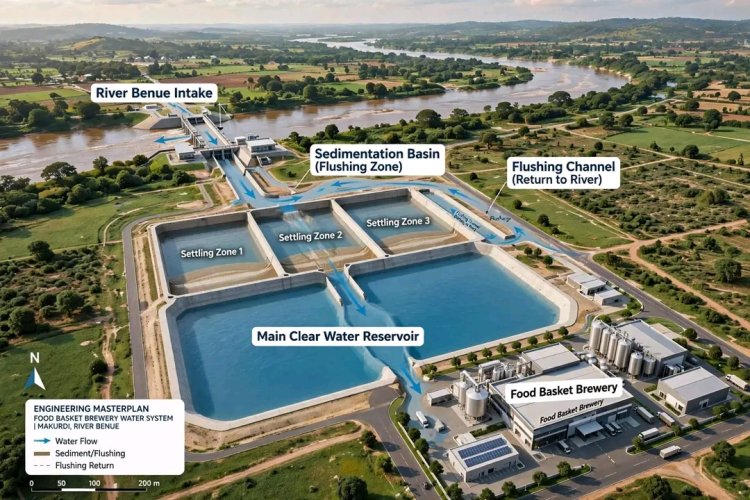
Some government statements issued to celebrate an achievement end up raising more questions than they answer. Yesterday, questions were raised about the Food Basket Brewery: its running costs and the absence of publicly demonstrated production. Today, the Managing Director of the Benue Investment and Property Company (BIPC), Dr Raymond Asemakaha Jr., responded by announcing that the company has begun test running a water treatment system to draw water from River Benue to the brewery. In doing so, he has confirmed that water has been a major challenge for the brewery. That admission should prompt a harder discussion than another round of congratulations. How did a government start a brewery project without first making sure that one of brewing's most basic needs was reliably available?
A brewery is not a roadside kiosk that opens first and looks for infrastructure later. Water is essential for brewing, cleaning and sanitation. Its availability, quality, treatment needs and cost should be settled before a project like this is sited and built. Where was the feasibility study? What did the technical assessment say about water at the chosen location? What were the projected daily water needs, and how was the source expected to meet them? What alternatives were considered, and what would a dependable supply cost? If these were answered before construction, why is BIPC now celebrating a water system as a step towards solving a challenge that has hindered operations? If the problem was unforeseen, who did the feasibility study, and what did it establish? If it was foreseen, why was the solution not part of the original plan? Benue people deserve answers, not another carefully packaged announcement.
The location makes these questions sharper. The brewery was not built beside River Benue, where intake infrastructure, treatment and environmental requirements aside, water would have been easier to reach. BIPC is now building a system to draw, treat and convey river water to the plant. There is nothing wrong with investing in water treatment, and the project may prove useful. The issue is why such a critical need is getting urgent attention only after the brewery was built and presented as an industrial achievement. Was the cost of river water included in the original capital budget? Were the pipeline and pumping infrastructure in the initial design? If not, what extra spending has become necessary, and who approved it? How much public money is going into correcting what may have been a planning failure? A government cannot build a facility, hit an operational wall and then expect applause for spending more to fix it without explaining what went wrong.
The announcement also draws attention to the diesel fired boiler reportedly installed at the brewery. Boilers supply the heat for production, and the choice of fuel shapes operating costs. Why choose diesel for a state owned brewery meant to run commercially in an economy where diesel is so expensive? What alternatives were considered at the design stage? How much diesel will the plant burn daily, and what does it cost to run the boiler at commercial output? Once water treatment, pumping, electricity, diesel, labour, packaging and distribution are counted, what does it cost to produce one unit of beer? These are basic questions of industrial economics. A factory can have impressive equipment and a finished building, but if its costs make its products uncompetitive, the state may end up subsidising it indefinitely. The public deserves to know whether these costs were properly assessed before approval.
Test running a water treatment system is not evidence of sustained commercial production. According to the information available, production is not ongoing. BIPC's own statement describes the system as undergoing test running and expected to support uninterrupted production once fully operational. That speaks of work in progress and anticipated benefits, not of beer being produced at commercial scale. There is a real difference between installing equipment, testing infrastructure, running trial batches and operating a viable factory. Why, then, was the brewery earlier presented in a way that suggested production had begun? When did brewing actually start? How much beer has been produced, how much bottled, and where are the verifiable records? What is the current status of the production line? These should be easy questions for BIPC if the project is progressing as represented.
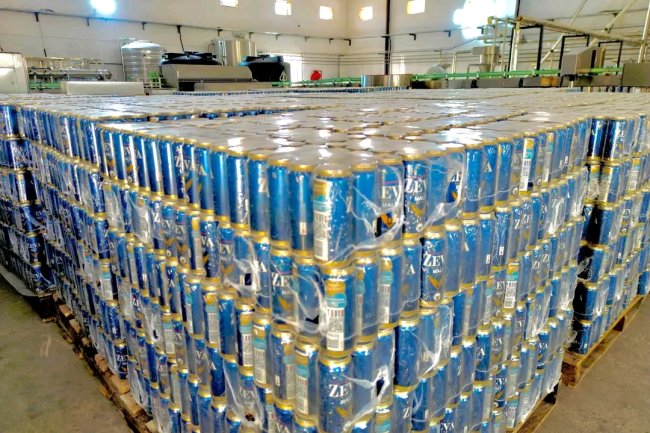
Then there is the unresolved matter of whether ZEVA beer is actually made at the Food Basket Brewery. Is it being brewed there, or is a product made elsewhere being packaged, distributed or marketed under the state's brewery brand? This must not be dismissed as political mischief. It is a legitimate question about the origin of a product tied to a publicly funded project. Equally, the absence of public production footage does not prove the beer is made elsewhere. The right response is verifiable evidence. BIPC should show the brewing process, the raw materials entering the line, the bottling operation and the finished product coming out. It should disclose when commercial production began, the quantities produced and the current status of operations. If ZEVA is truly made in Benue, explaining how it differs from contract manufacturing or resale should be easy. A brand name is not proof of local production, and a brewery building is not proof that beer is being brewed inside it.
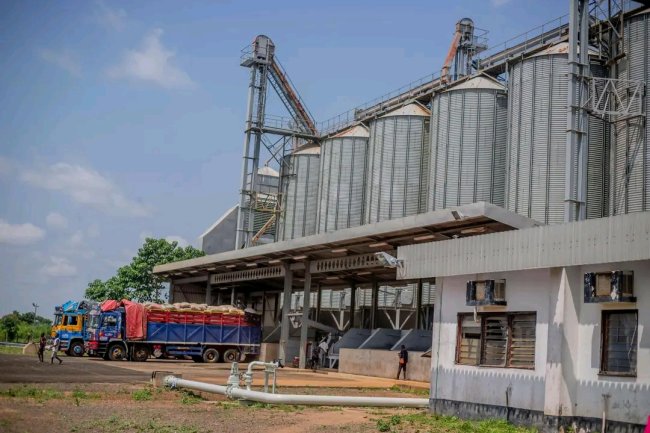
Beyond the question of where the beer is made lies the brewery's link to Benue's agricultural economy. If the facility is meant to advance industrialisation and create opportunities for local farmers, which farmers or cooperatives supply it with grains such as guinea corn? How much has been bought within the state, and what income has reached farming communities? If none of this is operational yet, what is the plan and the timeline? A state owned brewery should deliver measurable gains in jobs, local purchasing and tax revenue, not just a branded product. Without evidence of these, claims about economic diversification are hard to assess.
Dr Asemakaha has invited sceptics to visit the facility and see for themselves. The invitation is welcome, but public accountability cannot rest on citizens travelling to a factory. BIPC is a public investment company, and Benue people are entitled to see the feasibility study or a meaningful technical summary, the original and revised capital costs, the cost of the new treatment system, the boiler's operating costs and the plant's current status. Transparency is the best answer to public scepticism.