BIPC'S GREEN WHEELS: ANNOUNCEMENTS WITHOUT ACCOUNTABILITY
The Green Wheels initiative, unveiled by the Alia administration in April 2025, promised to revolutionise transportation in Benue through electric taxis, reduced fares, job creation and environmentally friendly mobility. Eighteen months later, questions remain about the whereabouts and operational status of the initial 20 vehicles, the promised 100 to 500 electric taxis, the CNG-powered vehicles, charging infrastructure and the proposed mobile booking application. This commentary interrogates BIPC's delivery record, commercial accountability and growing role in Governor Alia's publicity machinery, asking whether Green Wheels is a genuine transportation solution or another ambitious government announcement struggling to translate into measurable benefits for Benue residents.

By Aondoakaa Tersugh Daniel, 31/10/2026
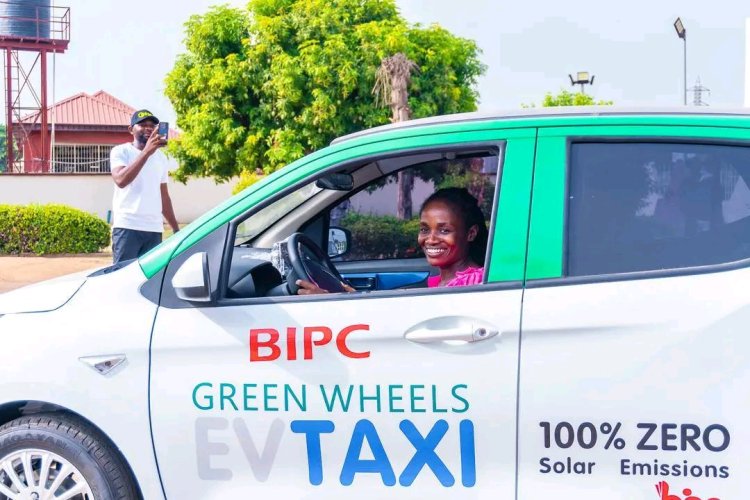
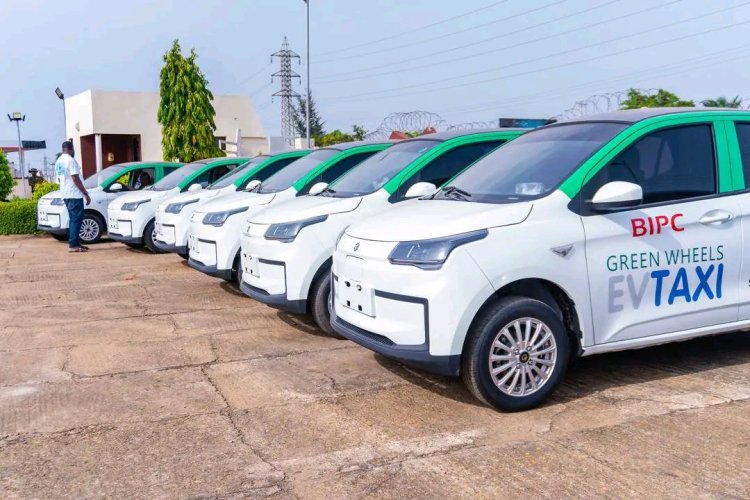
On April 11, 2025, the Benue Investment and Property Company Limited (BIPC) told the world that 20 electric and solar powered vehicles had arrived for its Green Wheels taxi service. The announcement followed a trip to China by Governor Hyacinth Alia and the BIPC Group Managing Director, Dr Raymond Asemakaha. We were promised cheaper transport, new jobs and a cleaner Benue. The GMD said the target was 100 vehicles and that commercial operations would begin before the end of April 2025.
Eighteen months later, I am no longer interested in how advanced those vehicles are. I want to know where they are. How many are on the streets of Makurdi, Gboko and Otukpo today? Which routes do they run, how many passengers have they carried, and by how much have transport fares fallen? Is BIPC earning anything from them? Delivery is not deployment, commissioning is not functionality, and publicity is not performance.
The figures also kept growing. From 100 vehicles, the talk moved to 500 electric taxis at the May 2025 launch, with private sector involvement and thousands of direct jobs attached to the projections. How many vehicles have been bought beyond the first 20? How many Benue youths are actually employed? A government that keeps raising the numbers attached to its promises, while citizens cannot find the results of the earlier ones, is asking to be doubted.
Then there is the infrastructure. In April 2025, the GMD promised an assembly and charging plant at the Mergemax facility beside BIPC headquarters, and a range of 500 kilometres on a single charge. Does that plant operate today? How many vehicles can it charge at once, and where does the electricity come from? Who handles maintenance and battery replacement? I also want BIPC to explain what solar powered means. Is it a solar charging station, or do the vehicles themselves draw meaningful propulsion from solar technology? These are basic questions for a project sold as a technological breakthrough.
The CNG story raises the same concern. In January 2025, BIPC announced a partnership with the Presidential CNG Initiative and AAZARAT Energy for a CNG station and conversion centre in Makurdi. It was meant to bring 500 CNG tricycles and buses to Benue and train young people in the technical work. How many of those vehicles have arrived? How many have been converted? How many young people have been trained? Has the conversion centre opened? Benue people deserve answers, not another announcement.
BIPC has since publicised the remodelling of its oil and gas facility near its headquarters to host CNG dispensing, electric vehicle charging points and an assembly unit. That is a commendable proposal, but a finished building is not a working business. Is it dispensing CNG to motorists? Can commercial drivers buy from it? How much gas has it sold? A facility waiting for commissioning cannot be paraded as the solution to the state's energy and transport problems. Benue needs functioning infrastructure, not architecture celebrated through press releases.
Makurdi itself exposes the contradiction. Several parts of the city are choked with dust from road projects that were disrupted or abandoned. Residents, traders and motorists live with the consequences every day. Yet the same administration wants applause for zero emission taxis as proof of its commitment to a cleaner environment. What good is a zero emission vehicle in a city where people breathe dust from poorly managed construction sites? Electric taxis cannot substitute for good roads, proper planning and basic environmental management.
The mobile app deserves the same scrutiny. BIPC promised that commuters would book rides online and enjoy round the clock service. Has the app been built? Can a resident download it today and book a Green Wheels taxi? Does it show vehicle availability, fares and live tracking? Is the 24 hour service real? These features were presented as what would set Green Wheels apart. If they do not exist, the technology component of this project has quietly disappeared.
The commercial questions matter just as much. How much did the first 20 vehicles cost, and who supplied them under what contract? Does BIPC run the taxis itself or through a private partner? What is the revenue sharing arrangement, what are the maintenance costs, and how much money has the scheme earned since launch? If public funds were used, Benue people have every right to know the returns. An investment company must be judged by the performance of its investments, not by the noise around its announcements.
This points to a bigger problem, which is the role BIPC now plays in the Alia administration's publicity. Water projects, asset revivals, electric vehicles and CNG infrastructure have all been pushed through the company as evidence of the governor's achievements. There is nothing wrong with ambitious commercial investment; that is what BIPC exists to do. But it must not become a second information ministry, where announcements are celebrated as achievements before their benefits can be verified. Its report card should be profit, asset growth, jobs and returns to the state economy.
I will say plainly what many people are thinking. Is Green Wheels a real answer to a real transport problem, or one more convenient project meant to package Governor Alia for reelection? The habit of attaching every BIPC announcement to the governor's political record makes that question unavoidable. A state owned investment company cannot serve as a campaign vehicle while escaping scrutiny over the commercial results of what it advertises.
Governor Alia and the BIPC management owe Benue people a full account. Where are the 20 vehicles, and how many are working? Where are the charging and assembly facilities? What became of the 500 CNG tricycles and buses? How many jobs exist, and what drop in fares can commuters honestly credit to this scheme? Until these questions are answered with verifiable evidence, Green Wheels will remain a grand promise whose publicity has travelled far ahead of its impact.