WHERE IS BENUE'S SCIENCE AND TECHNICAL EDUCATION BOARD?
Governor Alia has approved another technical college in Katsina-Ala, but what has happened to the Shitile project approved in January and the Science and Technical College at Ateku, Gboko? Beyond questionable project delivery, why is the Teaching Service Board leading technical college development when Benue already has a Science and Technical Education Board? Is Alia building functional institutions or multiplying announcements while existing agencies and projects remain unaccounted for? Benue needs completed technical colleges, not government publicity disguised as development.

By Aondoakaa Tersugh Daniel, 09/11/2026
Governor Hyacinth Alia has announced yet another project that sounds good on paper. On Sunday, November 8, 2026, at a Thanksgiving Mass in Ikyurav Tiev, Joo-Mbatyough, Katsina Ala Local Government Area, he directed the Executive Secretary of the Benue State Teaching Service Board, Rt. Hon. Bem Tseen, to lead the upgrade of Ikyurav Tiev Community Secondary School into a technical college. There is nothing wrong with two technical colleges in Katsina Ala if the needs of the area justify them. The problem is that this administration keeps announcing new projects while refusing to show Benue people how the old ones are going. Before we applaud another approval, we are entitled to know what became of the earlier ones.
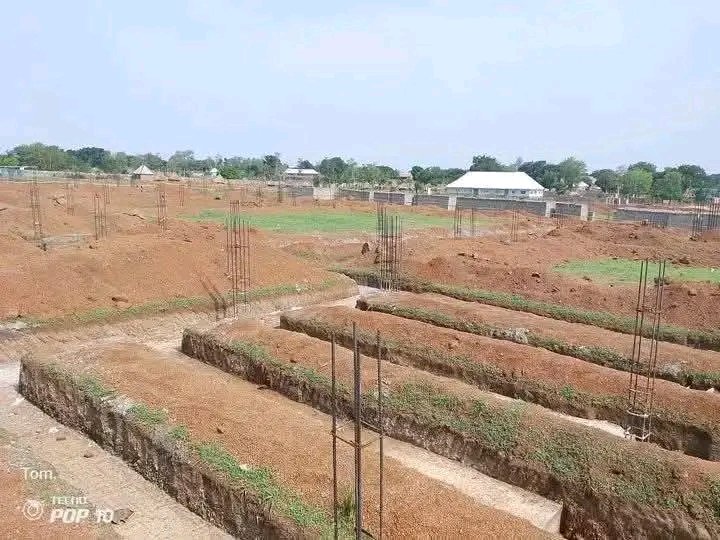
On January 14, 2026, the Benue State Government announced the approval to transform Shitile Community Secondary School, Tor Donga, also in Katsina Ala, into Shitile Technical College. The announcement reportedly came with a promise of completion within 12 months. Information from the site suggests that work has not gone beyond foundation excavation. The deadline has not expired, but the pace gives every reason to doubt that the government will meet its own target.
What is the approved contract sum? Who is the contractor? How much has been released? What percentage of the work is complete? Has the government run into funding, procurement or technical problems? A responsible government should answer these questions without being pushed by commentators. Any administration that sets a 12 month target should publish periodic reports on how it is pursuing it.
Then there is the Science and Technical College at Ateku in Gboko Local Government Area. On March 21, 2026, the Executive Chairman of the Benue State Internal Revenue Service, Mr. Joseph Kwaghgba, inspected the ongoing construction. His report praised the Governor's commitment to technical education, commended the pace of work and urged the contractors to deliver on schedule. Today, what is the status of that project? What was the contract sum, who got the contract and when will the college be ready? How much has been paid, and how much work has been done since the inspection?
Benue people deserve more than photographs of officials standing on construction sites and statements congratulating the Governor. An inspection is not a completion certificate, and commendation is not proof of value for money. If the government is confident of its achievements, publishing measurable project details should be easy.
Now comes Ikyurav Tiev, the second proposed technical college in Katsina Ala under this administration, after Shitile at Tor Donga. Add the Ateku project in Gboko and the question becomes clear. It is not whether Katsina Ala deserves two technical colleges or whether Gboko deserves one. It is how many of these projects the government can actually deliver. Technical education should not be reduced to a recurring announcement at political gatherings, thanksgiving services and community celebrations.
Benue needs functional institutions with equipped workshops and laboratories, qualified technical instructors, industrial machinery, relevant curricula and sustainable maintenance arrangements. Changing the name of a community secondary school does not turn it into a technical college. Without infrastructure, equipment and personnel, the government will end up creating institutions that exist only in press releases and not in the lives of the students they are meant to serve.
There is a more fundamental question. Why is the Executive Secretary of the Teaching Service Board leading the process of establishing a technical college? Benue already has a Science and Technical Education Board, known as STEB. In July 2023, its Acting Executive Secretary, Pastor Agena Williams, told the public that the state had 18 technical colleges. He named inadequate technical teachers as a major challenge and appealed for more investment. That was under this same Alia administration, which appointed him to lead the board. The National Board for Technical Education also lists STEB as the supervisory authority for Benue State University Technical College, Makurdi.
So what has happened to STEB? Has its mandate been transferred? Has it been restructured? Is it still operational? If it is, why is its leadership missing from the Governor's latest technical college initiative? The administration must answer these questions.
The distinction matters because technical colleges are not ordinary secondary schools with new signboards. They exist to give occupational and practical training that produces technicians, craftsmen and other skilled professionals. That requires specialised workshops, industrial equipment, vocational instructors, industry partnerships, competency based curricula and recognised technical qualifications. The National Board for Technical Education provides the national regulatory framework, and several states have specialised bodies to coordinate this sector. Bauchi has its Science and Technical Schools Board, Edo has a Board for Technical and Vocational Education, and Kaduna runs a Science and Technical Schools Management Board.
Benue does not have to copy any state, but it must understand the importance of empowering specialised institutions and defining their roles clearly. If the Teaching Service Board is now to coordinate technical college development, what is the role of STEB? Who supervises technical instructors? Who develops technical programmes? Who is responsible for workshops, equipment, accreditation and industry partnerships? A government cannot leave the public guessing which institution is accountable for its own education promises.
This points to a wider problem with Governor Alia's style of administration. His government has been busy creating agencies, bureaus and new structures, yet questions about overlapping responsibilities and the effectiveness of existing institutions keep growing. What is the point of adding more structures if the specialised bodies that should drive key sectors are left weak? Multiplying institutions is not reform. Real reform means strengthening institutions, removing duplication, clarifying responsibilities and improving service delivery. When a technical education board already has a record of supervising technical colleges, the government owes Benue an explanation for handing the establishment of new ones to another board.
Governor Alia has spoken of learning from the Lagos development model and of continuity in development planning. President Tinubu has also spoken of the need for appropriate, homegrown development models. Those principles must apply to education and institutional management, not just to infrastructure announcements. Successful models rest on institutions that are properly structured, funded and held accountable for results. Benue cannot borrow the language of development and ignore the institutional arrangements that make it last.
If the Governor wants more technical colleges, he should first publish a comprehensive technical education development plan for the state. It should list the existing institutions and their condition, the proposed new colleges, approved budgets, procurement arrangements, construction timelines, equipment needs, staffing requirements and the agencies responsible for implementation.
Governor Alia must answer some straightforward questions. What is the current status of Shitile Technical College at Tor Donga? What has happened to the Science and Technical College at Ateku, Gboko? What are their contract sums, contractors, funds released and completion timelines? What is the financial implication of the Ikyurav Tiev approval, and has money been appropriated for it? Why was Bem Tseen assigned to lead the process instead of STEB? What is STEB's present statutory and administrative responsibility?
These are not unreasonable demands from an opposition minded public. They are legitimate questions about public spending, institutional efficiency and the future of education in Benue State.
Benue does not need a government that keeps finding new schools to upgrade while the fate of earlier announcements remains unknown. It needs a government that completes its commitments, accounts for public funds and empowers the institutions responsible for specialised education. Governor Alia must understand that an approval is not a project, an inspection is not completion, and a change of school name is not technical education. Until he provides verifiable evidence of progress at Ateku and Tor Donga, the Ikyurav Tiev announcement will raise more questions than confidence. Benue needs technical colleges that produce skilled graduates, not an endless parade of approvals that produce political headlines.











