ALIA'S DEVELOPMENT CLAIMS: THE CAMPAIGN COUNCIL COUNTS KILOMETRES, BUT MAKURDI RESIDENTS ARE BREATHING DUST
Governor Alia’s campaign council is counting kilometres, contracts and billions, but residents of Makurdi are counting the months they have endured unfinished roads and suffocating dust. From the ₦56 billion Makurdi road programme to rural road projects, BIPC’s rising asset valuation and claims of workers’ welfare, the real question is not how much government says it has committed, but what has actually been completed, paid for and delivered. Benue deserves audited accounts, verifiable project status and measurable results, not another campaign catalogue disguised as a performance report. Before demanding another four years, Alia must account for the first three and a half.
By Aondoakaa Tersugh Daniel, 12/11/2026
A development story that celebrates roads awarded, kilometres opened and billions committed, but has no room for the residents protesting those same roads, is a story with something badly wrong in it. In "Governor Hyacinth Alia and the Case for Continuity", Elijah Terdoo Ikpanor, Director II of Research at the Tinubu/Alia Campaign Council, lists government interventions as grounds for another four years. The list counts projects. It does not account for their delivery.
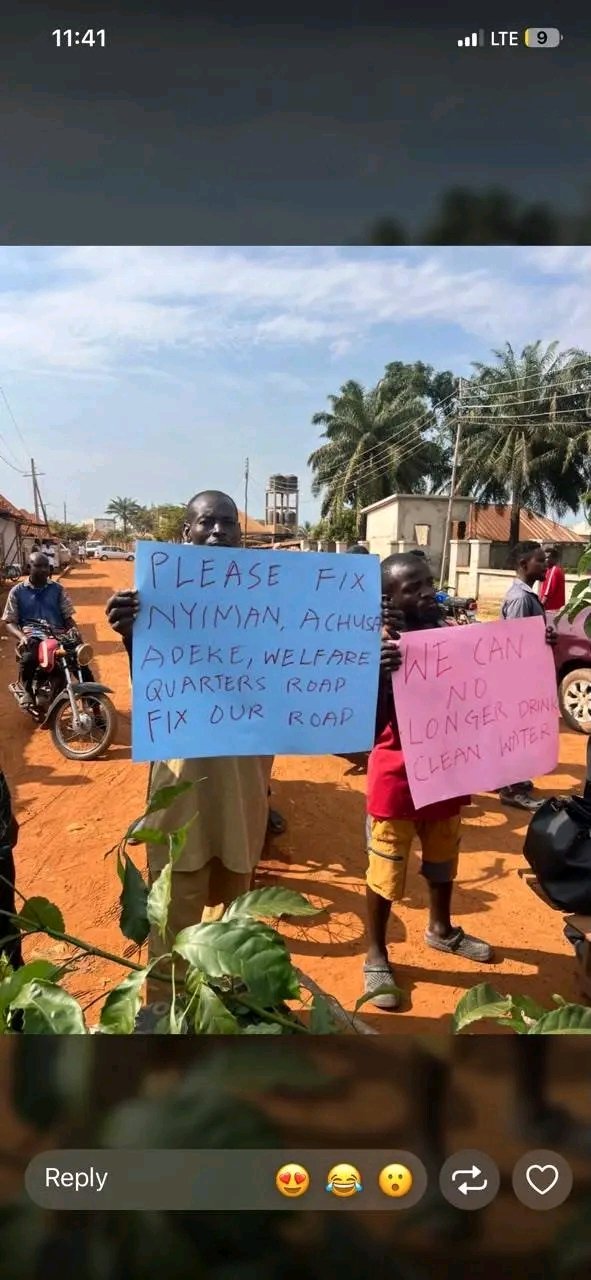
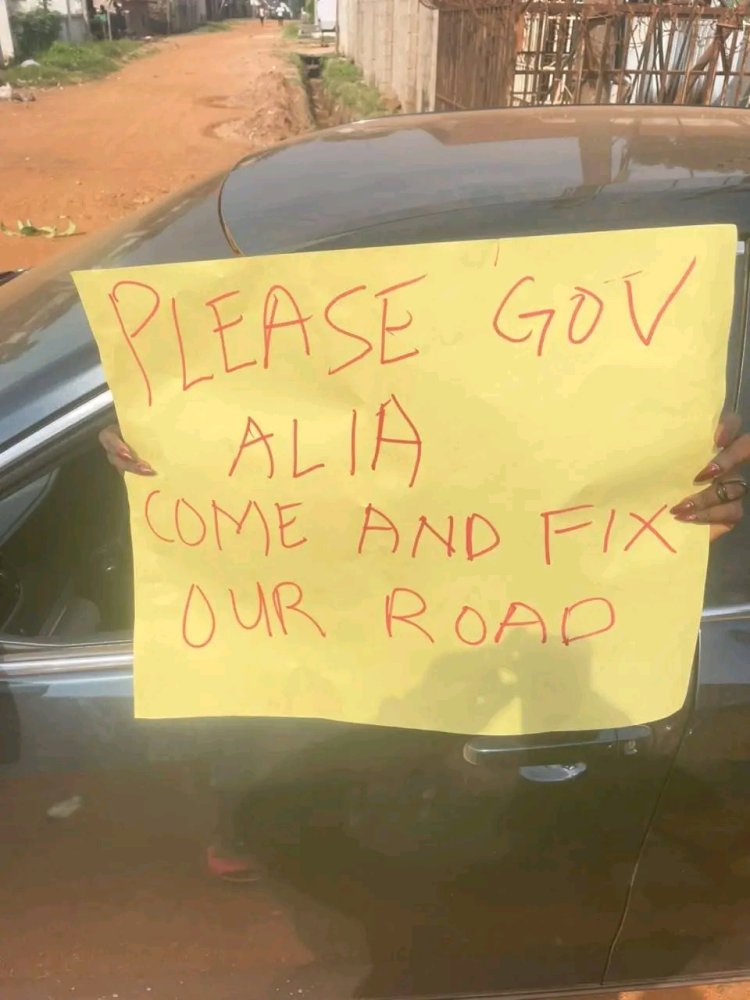
While the campaign council celebrates, residents of Nyiman and Achussah in Makurdi are complaining about stalled construction, dust pollution and worsening living conditions. On November 6, they reportedly staged a peaceful protest over the state of their roads. Earlier, youths from the area had barricaded construction activities to draw attention to abandoned stretches. These are real communities, not opposition statistics. What transformation is being celebrated when people cannot breathe comfortably in their own neighbourhoods?
Ikpanor's article does not separate a road contract awarded, a road under construction, a road completed and a road commissioned. These are four different stages of delivery, yet they sit together as one achievement. Take the ₦56 billion Makurdi road reconstruction programme covering 38.6 kilometres. When the Ministry of Works announced it in January 2026, its Director of Civil Engineering Services reportedly said the major works would be completed within six weeks. That pointed to February. It is now November, and the campaign article still calls the programme ongoing, with no completion status for individual roads, no figures on funds released or paid to contractors, and no revised delivery dates.
At roughly ₦1.45 billion per kilometre, this is not an expenditure to be defended with slogans about urban renewal. Where are the completion certificates and the independent engineering assessments? What percentage of the 38.6 kilometres has actually been rebuilt? Have the promised bus stops, walkways, dividers and traffic-control systems been delivered? Benue people deserve answers, not another list of road names.
The same questions apply elsewhere. Procurement records show the 3.6-kilometre Jonah Jang Crescent dual carriageway was awarded to Triacta Nigeria Limited in 2025. What is its completion percentage, its original completion date and the amount paid? The 19.89-kilometre Makurdi Township Roads Phase III awarded to Fatrede Nigeria Limited, and the other packages awarded to Triacta and Bauhaus Global Investment, deserve the same scrutiny. Announcing that more than 45 roads have been completed and over 50 undertaken proves nothing without the data to verify it. The administration should publish a road register showing each project, contractor, contract sum, start date, contractual completion date, percentage completion and payment status.
The High-Level Interchange and underpass is even more telling. In September 2026, the Ministry of Works reportedly acknowledged drainage and finishing deficiencies when the project was said to be about 98 per cent complete, and Bauhaus Global Investment was directed to correct them at its own cost. Why were these defects discovered so late? Have the corrections been made, and has the structure been independently inspected? A project can look impressive and still fail in function. Infrastructure is judged by how well it serves the public, not by how it looks at a commissioning ceremony.
The rural roads fare no better. The campaign article presents the roughly 52-kilometre Oju-Awajir road as a major intervention, yet an August 2026 report said only about 19 kilometres had been asphalted, with earthworks continuing on about 30 kilometres. That is a construction site, not a completed road. The Igumale-Agila and Obagaji-Okokolo-Agagbe roads, with reported contract values of about ₦19.37 billion and ₦29.89 billion respectively, also demand progress and expenditure disclosures.
Then there is the Mbawuar-Bako-Naa road and its spurs in Vandeikya, with a contract valued at about ₦73.92 billion according to procurement records. How much has been asphalted and paid for, and what is the status of each spur? Naming the benefiting communities is not a progress report. A road that connects communities on paper but cannot be used in practice delivers no economic benefit.
Attribution is another issue the campaign council cannot dodge. The article lists the Rural Access and Agricultural Marketing Project, RAAMP, among the Alia administration's achievements without explaining who pays for it. RAAMP is jointly supported by the Federal Government, the World Bank and the French Development Agency. Benue has implementation responsibility, and credit is due for what it has truly delivered. But how much has Benue contributed, and how much came from partners? How many of the reported 370 kilometres are complete, and what is the verifiable status of the claimed 140 bridges and culverts? Adding up the outputs of a jointly financed programme and presenting them as the state's sole work is political appropriation, not accountability.
The treatment of BIPC follows the same pattern. The rise in its reported asset valuation from about ₦7.95 billion to ₦25.15 billion is offered as proof of industrial transformation. But a higher valuation is not revenue, revenue is not profit, and profit is not cash in hand. Where are the audited accounts showing turnover, operating costs, profit or loss, liabilities and cash flow? How much dividend has BIPC paid into the state treasury, and how much public money has gone into its factories? The workforce is said to have grown from 121 to about 784, but how many are permanent, how many are on contract and how many work in commercially productive operations?
Taraku Mills shows the gap clearly. Its reported installed capacity is about 200 tonnes daily, while the production figure previously discussed was about 50 tonnes. That is 25 per cent capacity utilisation. Reviving the mill deserves recognition, but test production is not commercial success. What does it produce monthly, what is its turnover, how much does it buy from Benue farmers, what does it cost to run and is it profitable? The same questions apply to Food Basket Brewery, Benval Juice Factory, Bensono Concentrate Factory and the rest. Benue needs profitable industries, not factories whose main product is government publicity.
On workers' welfare, the campaign article points to the settlement of arrears at tertiary institutions. Paying workers what they are owed is commendable, but it does not erase the suffering they endured while waiting. The government reportedly cleared 45 months of arrears, over ₦2 billion, for workers in five state-owned tertiary institutions in November 2026. Why did the arrears pile up for so long under this administration? And the September 2026 agreement with ASUTIBS on the 25 and 35 per cent salary adjustments sits awkwardly beside the article's claim that those adjustments were already fully implemented and paid. If every obligation had been met, what was the September agreement for? Payment schedules, arrears breakdowns and proof of full implementation should be published. Workers' welfare is a government responsibility, not a campaign gift.
The confusion between inputs and outcomes also runs through security, healthcare and agriculture. Hilux vehicles and motorcycles do not prove that communities are safe. Recruiting health workers does not prove better access to care, and buying fertiliser does not prove higher harvests. The campaign council should tell Benue people how many displaced residents have returned home, how many communities have regained access to their farms, how hospital services have improved and by how much agricultural output has grown after billions in input support. These outcomes can be measured. Listing what was bought, recruited and distributed is no substitute for showing results.
At bottom, Ikpanor treats continuity as the natural reward for starting projects. It is not. A government cannot turn every unfinished contract into an argument for another term. If roads are incomplete, the administration must explain the delays. If construction sites poison the air residents breathe, those residents are owed protection. If billions have gone into industries, the public is owed audited results. If workers endured long arrears, the government must account for how that happened. Benue people are not against development, and demanding accountability is not opposition to infrastructure. What they reject is being asked to applaud announcements while living with the cost of unfinished work.
The most telling omission is that Ikpanor, writing as a senior research official of the campaign council, never confronts the residents questioning the very projects he celebrates. A research directorate should do more than gather government figures. It should test whether those figures change lives. The people of Nyiman and Achussah are not asking for another catalogue. They want contractors back on site to finish the job. Makurdi residents want roads that are completed, drained and safe to live beside. Benue farmers want real access to markets, and workers want salaries paid on time.
The question before Benue is not whether Governor Alia has started projects. It is whether he has delivered enough, accounted for public money honestly and shown the capacity to finish what he began. Before asking for another four years, the campaign council should account for the first three and a half. Benue does not need a government that merely counts roads. It needs one that completes them, explains the money spent and delivers development its people can feel.