WHEN THE GMD GOES CAMPAIGNING: HAS BIPC BECOME PART OF ALIA'S CAMPAIGN STRUCTURE?
Why did BIPC establish the Food Basket Brewery and bottled-water factory without first adequately resolving their water supply requirements? With a separate River Benue water treatment project now necessary, questions arise about the company's original feasibility studies, additional public expenditure, production capacity and commercial viability. What market gap justified government investment in bottled-water production when private producers already serve Makurdi? And following the announcement that the treatment facility had been completed, has production commenced consistently at both factories? Beyond these concerns, the appearance of BIPC's GMD on Governor Alia's 2027 campaign council raises questions about the company's institutional priorities. Is BIPC building a commercially sustainable investment portfolio or becoming an extension of the Governor's political machinery?

By Aondoakaa Tersugh Daniel, 05/11/2026
Under the Alia administration, the story of the Benue Investment and Property Company (BIPC) has become one of factory announcements and unanswered questions. A brewery was established, a bottled water factory was built, and other production units were introduced as proof of an industrialisation drive. Before public money was committed to any of them, did anyone prepare a feasibility study, and were these ventures designed to make a profit?
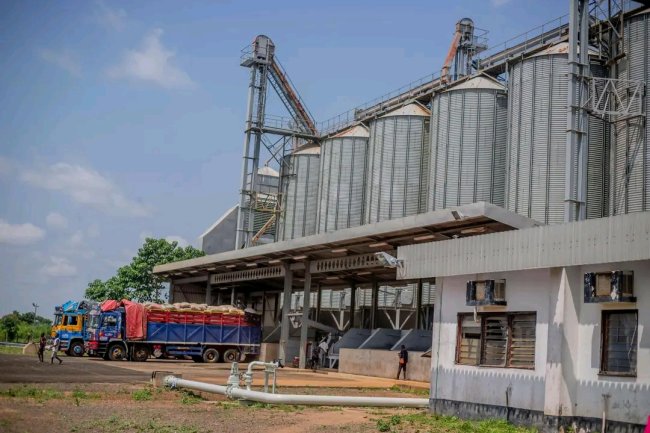
Take water. A brewery and a water factory cannot run without it, yet the Food Basket Brewery and the BIPC Water Factory were sited away from the River Benue, the most obvious source of raw water in the state. Who approved those locations without first settling how water would be sourced, treated and delivered? This is not a complicated question. It is the first thing responsible industrial planning is supposed to answer.
BIPC has now decided to build a separate water treatment plant and reservoir to serve the brewery, the water factory and other units. The plan involves a 6.2 kilometre conveyance line from the River Benue. In other words, the factories were built first, and the company is now building a second project to fetch the water they needed from the start.
Was that pipeline part of the original design and budget? If it was not, who is accounting for the extra expenditure, and how much more public money has gone into fixing a problem that should have been foreseen? Benue people are entitled to know the true cost of these factories, not just the cost of the part that was announced.
On October 20, the GMD announced that the treatment plant had begun test running. On October 27, BIPC announced that the project was complete. We were left to assume the test run succeeded and that steady water was now flowing to the industrial units.
So I ask plainly. Is treated River Benue water reaching the brewery and the water factory today? Has the Food Basket Brewery started commercial production? Is BIPC Water running without interruption, and how much is it producing, distributing and selling? A completed treatment plant is not an operating brewery, and an operating factory is not automatically a profitable one. Benue does not need another completion announcement. It needs proof that these investments are working.
There is also the matter of why bottled water was a priority at all. Makurdi already has private producers serving the market. Aquatrust, for instance, is reported to have roughly twice the installed capacity of the BIPC Water Factory. What gap did BIPC find that private businesses could not fill?
Was there a shortage of table water? Were consumers being overcharged? Or did BIPC simply see private companies making money and decide the government should do the same? Public investment in manufacturing must rest on a real economic need and a business case that can be defended. Adding one more factory to the list of government achievements is not a reason.
A state owned investment company should be careful about spending public capital in markets that private enterprise already serves. What does BIPC bring that others do not? Can it produce more cheaply, distribute at lower cost, employ more people and still return enough to justify the investment? Or will it compete for the same customers while leaning on government ownership and public resources? These were questions for a market survey before approval, not after commissioning.
Then there is the opportunity cost. Benue is an agricultural state, and its farmers need processors who will buy their produce at prices that make farming worthwhile. BIPC could have put its money into cassava processing, yam flour, rice milling and food preservation. Those investments would have created markets, reduced post harvest losses and provided jobs across several local government areas.
I am not saying Benue should have no brewery or water factory. I am asking what economic assessment led to these choices, what returns were projected, how many jobs were promised, and how the ventures are performing today. Where are the figures?
The same scrutiny applies to the GMD's claim that BIPC's asset valuation has risen from about ₦7.95 billion to ₦25.15 billion. A higher valuation does not prove commercial success. Buildings and machinery can raise a company's book value without producing a kobo of revenue or profit.
What matters is operating income, production volumes, sales, liabilities, running costs and returns on investment. How much has the brewery earned? What does the water factory contribute? Are these subsidiaries paying their own way, or do they depend on fresh government support to stay alive? Benue needs an investment company that creates wealth, not one that collects factories and inflates paper values. The GMD should publish the commercial results instead of hiding behind asset valuation.
These concerns have become sharper now that the GMD appears on the Alia 2027 campaign council list. BIPC exists to grow commercial assets, attract investment, create jobs and earn returns for the state. It is not a campaign organisation.
Can the GMD properly run a public investment company while serving in the Governor's reelection machinery? What safeguards prevent BIPC staff, facilities and vehicles from being used for partisan purposes? Anyone may choose to take part in politics. But the head of a state owned investment company must not leave the impression that the institution answers to the Governor's political interests first.
The Alia administration must understand that industrialisation is not built on commissioning ceremonies, project inspections or photographs of new machines. It is built on sustained production, competitive markets, jobs, profits and measurable gains for the state economy. The brewery must produce beer, the water factory must supply the market, and every other unit must show that it can stand on its own.
Benue residents deserve answers. Where were the business plans before these investments began? Why was water supply, the most basic production need, not settled at the outset? How much additional public money was needed to make the factories work? What market gap justified a government water factory? And now that the treatment project is declared complete, where is the evidence of sustained production and commercial returns?
BIPC was set up to create economic value for Benue State, not to serve as a stage for announcing achievements or coordinating politics. The true test of Governor Alia's industrial record is not how many factories he can show during the campaign. It is how much wealth those factories are putting in the hands of the people of Benue.