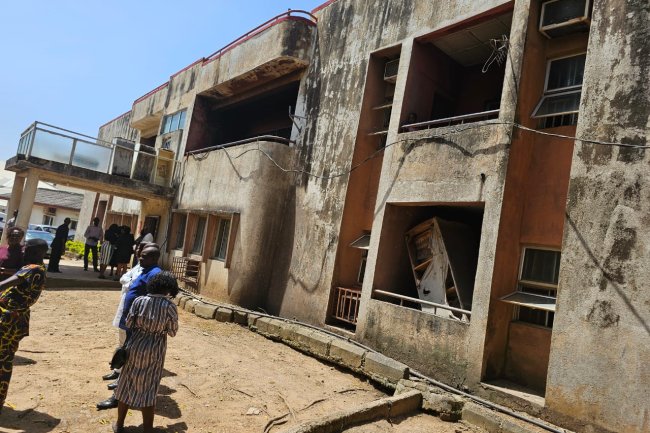
WHY CREATE A TOURISM BUREAU IF BIPC MUST DO THE JOB?
BIPC is courting American investors to revive Ikyogen Ranch and preparing to open Galleria Park, yet Benue’s Bureau for Arts, Culture and Tourism remains under scrutiny. With ₦422.4 million proposed for the bureau in the 2026 budget, just ₦110,000 in reported revenue performance for January to September 2025, and no revenue target stated for 2026, questions about its role and results are unavoidable. Why is BIPC taking the lead on tourism attractions while a dedicated tourism bureau consumes public funds? Alia’s expanding government must explain who does what, who delivers results, and who is accountable.
By Aondoakaa Tersugh Daniel, 28/10/2026
If there is one defining feature of Governor Hyacinth Alia's administration, it is the multiplication of ministries, bureaus and agencies without any public explanation of how their responsibilities differ. Citizens are left wondering who is responsible for what, and the proposed revival of the Ikyogen Cattle Ranch has now put that confusion in plain view.
On 28 July 2026, the Benue Investment and Property Company Limited, BIPC, announced discussions with Vallejo Services of Texas, United States, to revive Ikyogen Cattle Ranch in Kwande Local Government Area and Ikwe Wildlife Park in Gwer East. The proposed public private partnership is meant to support commercial livestock production and milk processing and bring dormant public assets back to life. Negotiations are not a completed investment, but they raise an obvious question. Where is the Bureau for Arts, Culture and Tourism in a project with this much tourism potential?
The question gets sharper when we look at what BIPC said a month later. On 28 August 2026, its Group Managing Director, Dr Raymond Asemakaha, announced during an inspection that the Galleria Park in Makurdi will open in December 2026. He described a modern recreational facility with a waterfall, a serene environment and an event centre with a capacity of 1,000 for weddings, conferences and other gatherings, meant to promote relaxation, entertainment and family bonding. He said it would create more than 100 direct jobs and over 500 indirect ones, and he described BIPC as a special purpose vehicle and engine for driving economic growth, investment and development across the state.
An amusement park, a waterfall, an events venue and a wildlife park are the stuff of tourism, recreation and hospitality. So I ask plainly: why is BIPC taking over the duties of the Bureau for Arts, Culture and Tourism? Is a company created to attract investors and manage commercial assets now planning, building and running the state's leisure attractions? If so, what is left of the tourism bureau's mandate? And who authorised this shift in responsibility?
Ikyogen could be far more than a cattle ranch. Properly planned, it could combine livestock production with hospitality, recreation, educational visits and nature tourism. That would bring in visitors, create jobs, support local businesses and earn revenue for the state. But it needs livestock experts, tourism planners and investment facilitators working together, and BIPC's announcements say nothing about how those roles are shared.
Obudu Ranch in Cross River State shows what is possible. A ranch grew into a recognised tourism destination far beyond its original livestock purpose. Benue has natural attractions and cultural heritage of its own, but turning them into economic assets takes a clear strategy. Is the Alia administration pursuing an integrated livestock and tourism model for Ikyogen, or is it treating the project as a purely commercial ranching venture run by BIPC?
The government's own structure makes the question unavoidable. Benue has a Ministry of Animal Husbandry and Fisheries Development responsible for livestock, veterinary services and ranching. It has a Bureau for Arts, Culture and Tourism mandated to promote tourism and develop the state's cultural and tourism assets. BIPC is positioned to attract investors, facilitate partnerships and manage investments. These bodies could complement one another, yet the government has not said what each will do at Ikyogen or at the Galleria Park. If BIPC is facilitating investment, who owns the tourism development plan? Who designs and promotes the visitor experience, and how will the performance of the tourism component be measured?
These are not small administrative details. They decide whether Benue's expanding government is organised around clear responsibilities or is just piling up institutions that overlap, with one of them quietly absorbing the work of another. If the livestock ministry, the tourism bureau and the investment company are all expected to contribute, there should be a framework showing how their efforts fit together. Otherwise, what does each add that existing institutions could not deliver? I have asked the same of the Bureau of Special Projects and Infrastructure, the Bureau for Solid Minerals, the Bureau of Entrepreneurship and Wealth Creation and the Bureau for International Cooperation and Development, and the answers are still missing.
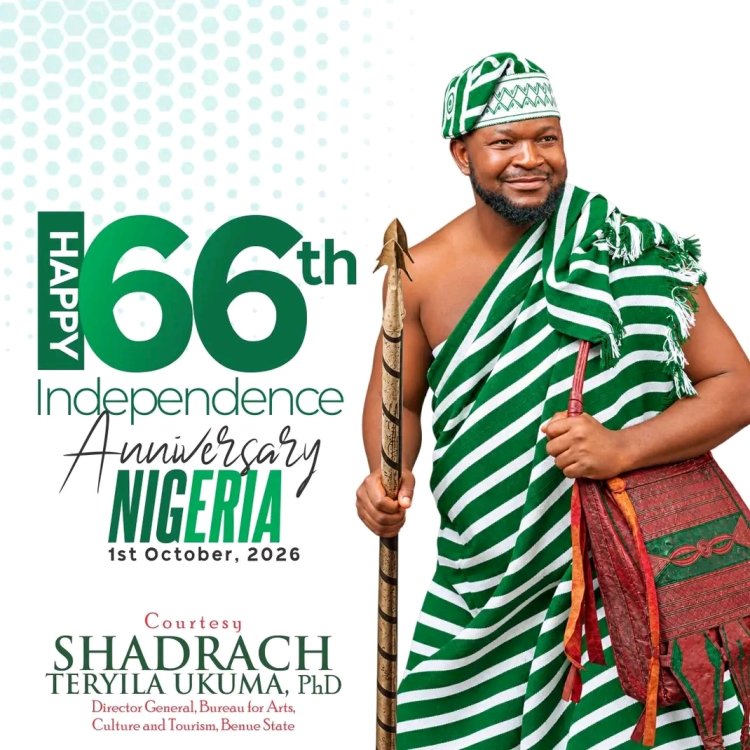
To be fair, the tourism bureau has not been entirely idle. During an oversight visit by the House of Assembly Committee on Culture and Tourism in December 2025, its Director General, Dr Shadrach Teryila Ukuma, listed a website with a virtual museum portal, digital onboarding of hotels, cultural variety shows and a memorandum of understanding for a proposed $15 million Benue Creative Industries Fund. He also spoke of plans for a zoological garden and the revitalisation of hotel assets.
But announcements and administrative initiatives are not tourism projects, and they are certainly not a tourism economy. Where are the operational attractions, the completed rehabilitation works, the investment actually secured, the jobs created and the revenue earned? Meanwhile, BIPC is the one standing at a construction site announcing an opening date. Perhaps that explains why the public hears more about BIPC's attractions than the bureau's.
The budget makes the matter worse. The 2026 Proposed Budget allocates about ₦422.4 million to the bureau, including roughly ₦117.63 million in capital expenditure. Yet the same document records revenue of only ₦110,000 between January and September 2025, against a revised annual estimate of about ₦3.85 million. For 2026, it states no revenue estimate for the bureau at all.
These figures do not prove by themselves that the bureau has failed, but they expose a serious gap. What facilities has it developed or rehabilitated, and which tourism projects are operational? Why does an institution charged with promoting revenue earning attractions carry no revenue target in the coming budget? Hundreds of millions of naira cannot be committed to an agency that expects to earn nothing back, while another institution builds the parks.
The Ikyogen and Galleria announcements sharpen all of this. BIPC has taken the lead in presenting both, while the tourism bureau's role and the division of operational duties remain unexplained. The administration must say whether BIPC will act only as an investment facilitator or take on a management role, and how the tourism bureau and the livestock ministry will participate.
The state of the Ikyogen partnership also matters. Talks with Vallejo Services do not mean an agreement has been signed, funds released or rehabilitation started. As for Galleria Park, the public deserves to know who is funding it, who will own and operate it, and how its revenue will be shared with the state. Benue deserves to know where negotiations stand, what investment commitments are on the table, what terms will be agreed and what safeguards will protect public assets. Success will be measured by restored and productive operations, not by announcements and opening dates.
Governor Alia's government must therefore be judged by more than the number of institutions it creates or the number of investors it receives. Good government needs clear mandates, coordinated implementation and visible results. If BIPC can mobilise investment and build parks, the government must explain what the tourism bureau contributes. If the livestock ministry owns ranching, its technical role must be clearly defined.
Benue does not need institutions that merely occupy offices, issue announcements and compete for visibility. It needs institutions with distinct duties that turn public spending into measurable development. Ikyogen is a chance for the administration to show that its ministries, bureaus and agencies can work within a coherent framework, instead of leaving the public to guess where one institution ends and another begins.
Benue's tourism potential is real, its cultural heritage is valuable, and its dormant public assets deserve revival. But potential is not performance, and creating a bureau is not the same as building an industry. Until the administration shows how its institutions are working together to produce functioning enterprises, jobs and revenue, two questions will stand: why is BIPC taking over the work of the Bureau for Arts, Culture and Tourism, and what exactly is that bureau delivering for the money it is given?